Grippy
A smart putter grip for an immersive tech-infused minigolf experience. 200 units deployed. Designed from PCB to enclosure.
What is Grippy?
Grippy is a custom-designed smart putter grip for an immersive minigolf experience. Mounted at the top of each putter, it gives players a physical connection to the game world: LEDs pulse and animate in sync with environmental cues, a 240×240 round TFT display shows game state under a glass dome, a vibration motor delivers haptic feedback, and a buzzer provides audio confirmation of game events.
The entire device, from schematic to PCB layout to 3D-printed ice cream cone enclosure, was designed by Elizabeth Sonder. The first iteration shipped 200 units and ran in production for one year. A second iteration with an updated enclosure and software interface is in active development for Lollyland 2.0.
| Microcontroller | ESP32-C3 (Espressif ESP32-C3-WROOM-02U) |
| Display | 240x240px round TFT, under acrylic dome |
| LEDs | WS2812B addressable RGB, 11x around PCB perimeter |
| Input | 3x tactile switches (SW1, SW2, SW3), electronically isolated |
| Feedback | Vibration motor, passive buzzer |
| Power | 18650 Li-ion cell, USB-C charging |
| Enclosure | Custom 3D-printed, ice cream cone form factor |
| Connectivity | Wi-Fi via ESP32-C3 |
| Role | Full ownership: PCB design, enclosure, human interaction design. |
| Units deployed | 200 (Iteration 1); Iteration 2 in development |
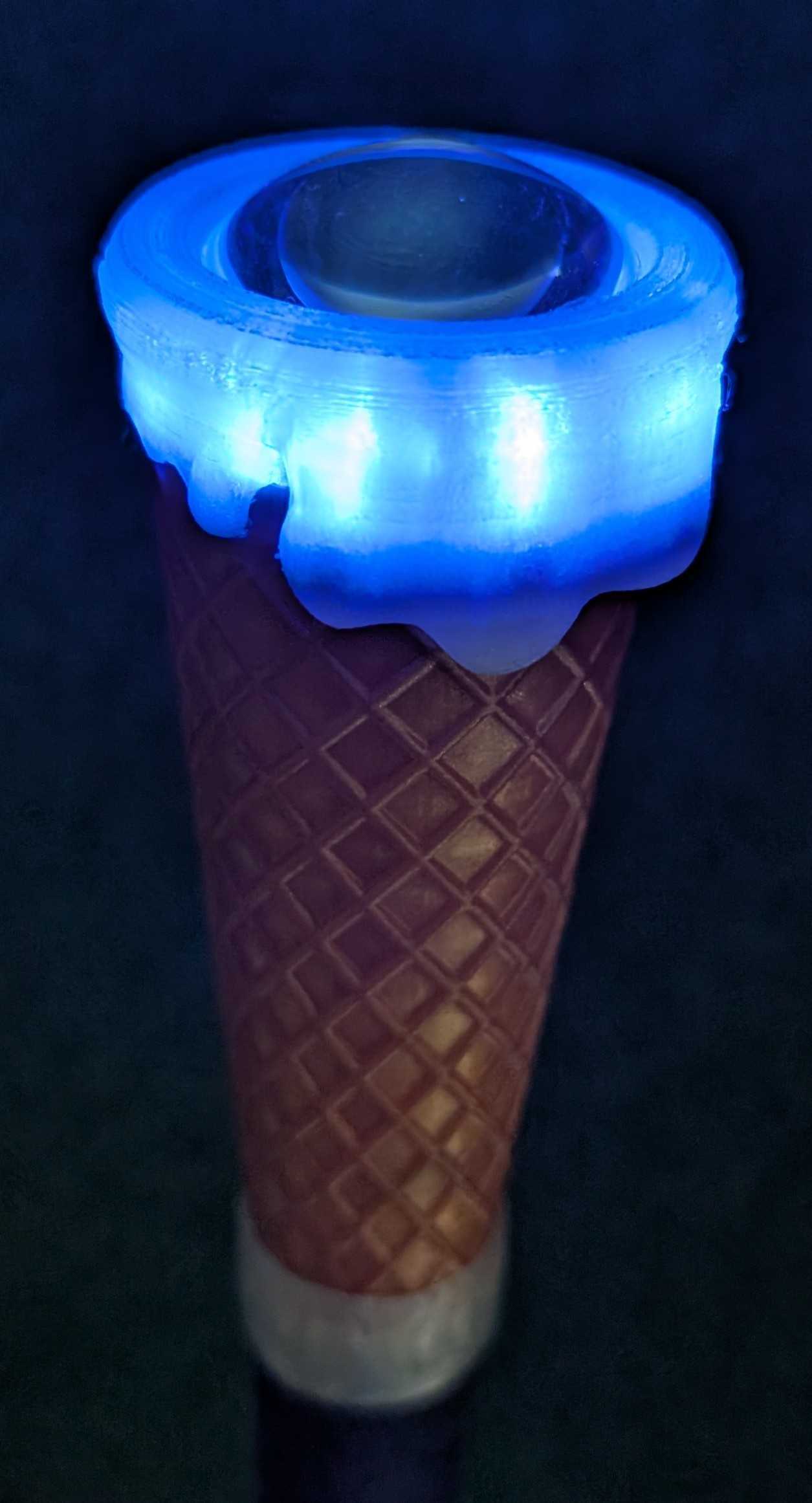
// Grippy mounted on a putter, as players experience it in Lollyland.
// In Play
Grippy sits at the top of each putter, placing the display and controls directly in the player’s hands throughout every hole. The ice cream cone form factor complements the greater Lollyland context.
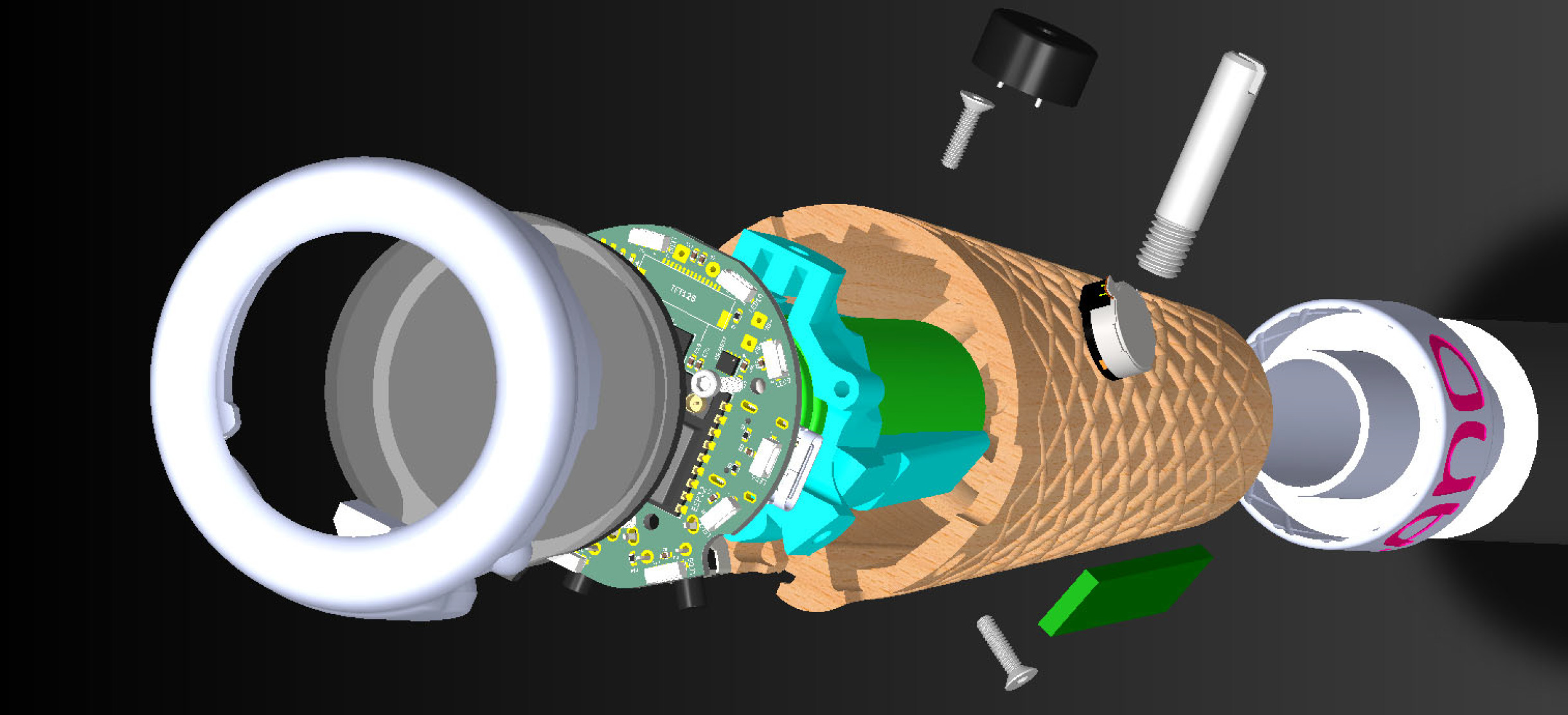
Grippy mounts to the putter shaft via a single stud that passes through the rear shell and the aluminum pole, threading into a blind insert in the front shell. This creates a secure and resilient connection that won’t work loose during play or over time. A customizable TPU gasket marries the shell to the existing putter grip artfully.
Three-Part Assembly
Grippy is assembled from three components: the ice cream cone shell, the electronics puck (PCB, display, battery, and switches), and the ice cream dome top housing the display lens. The design prioritizes elimination of maintenance interventions and ease of assembly at production scale.
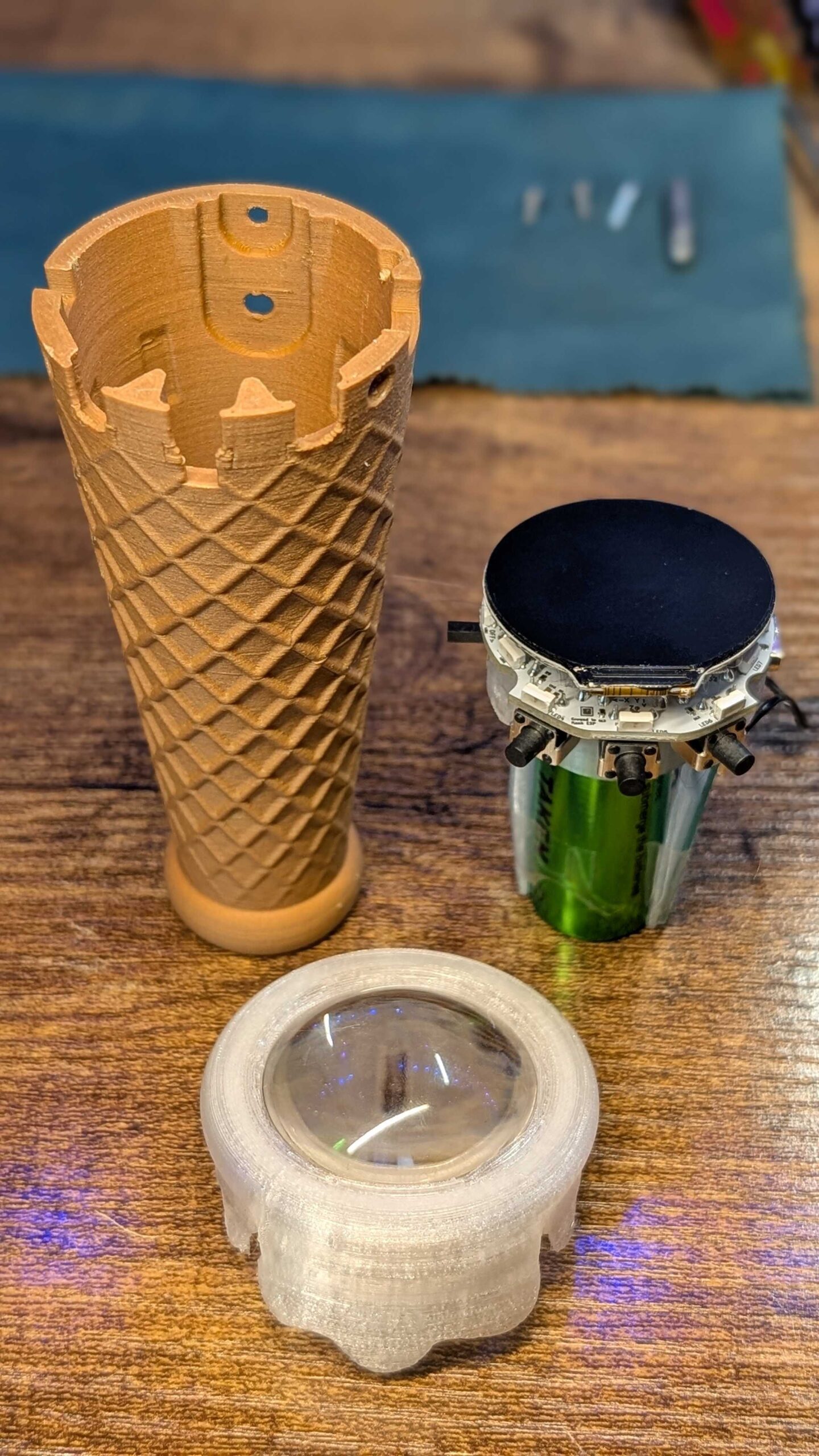
3D-printed PLA enclosure in waffle cone texture. Internal scaffolding secures to enclosure with three screws for stability and resilience.
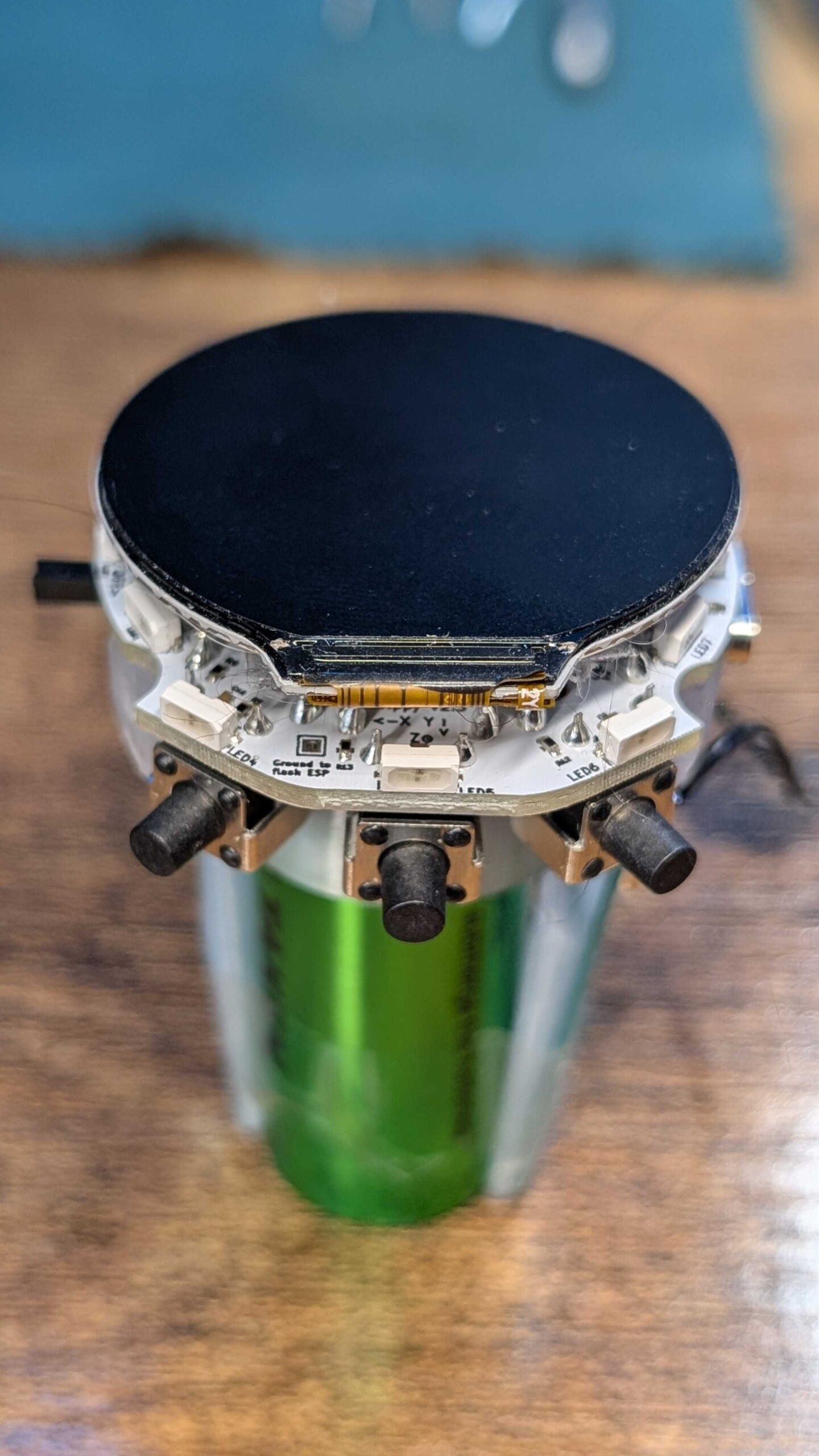
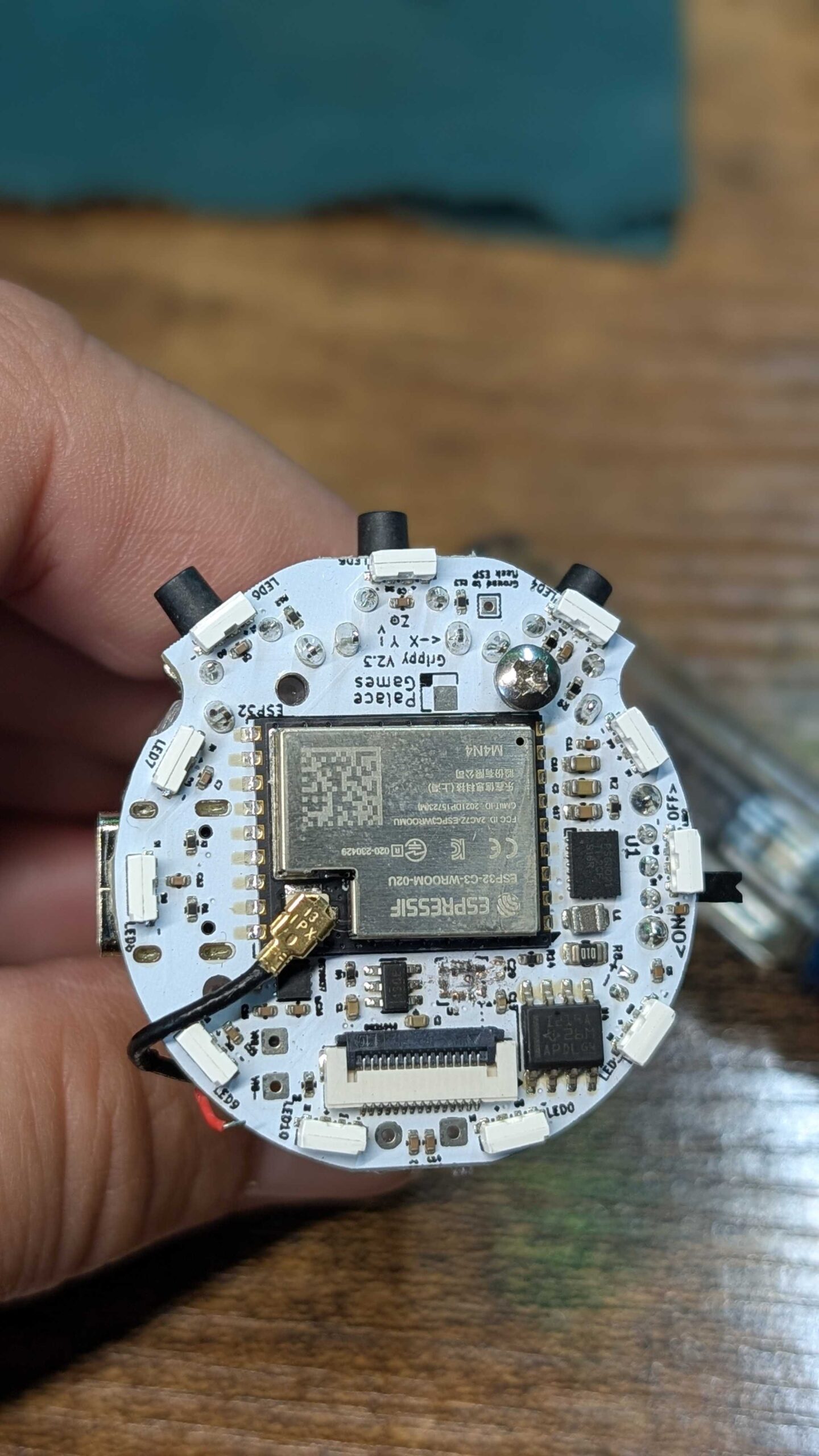
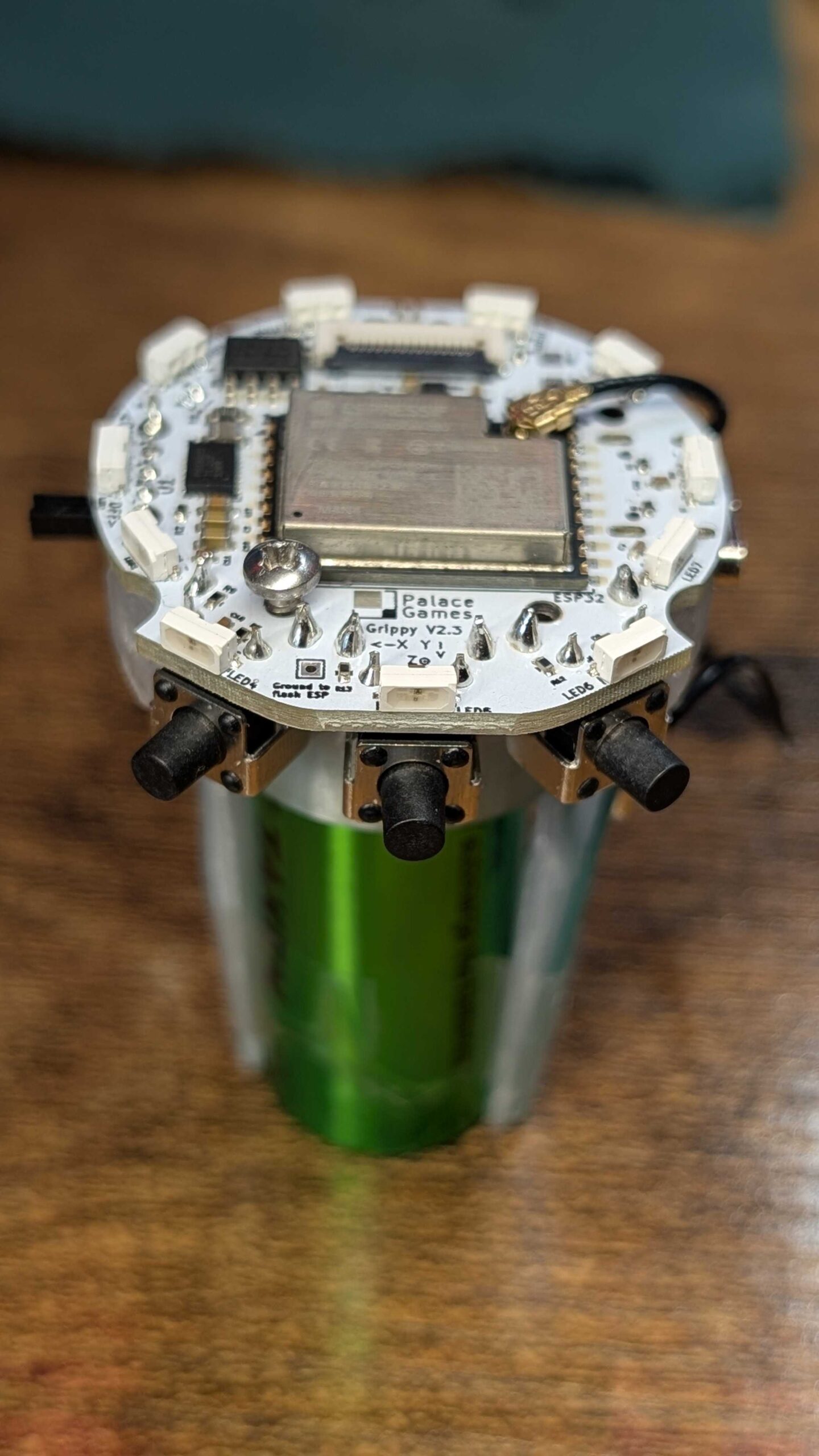
Custom PCB with ESP32-C3, WS2812B LEDs, tactile switches, vibration motor, buzzer, and 18650 battery. USB-C port for charging and firmware flashing.
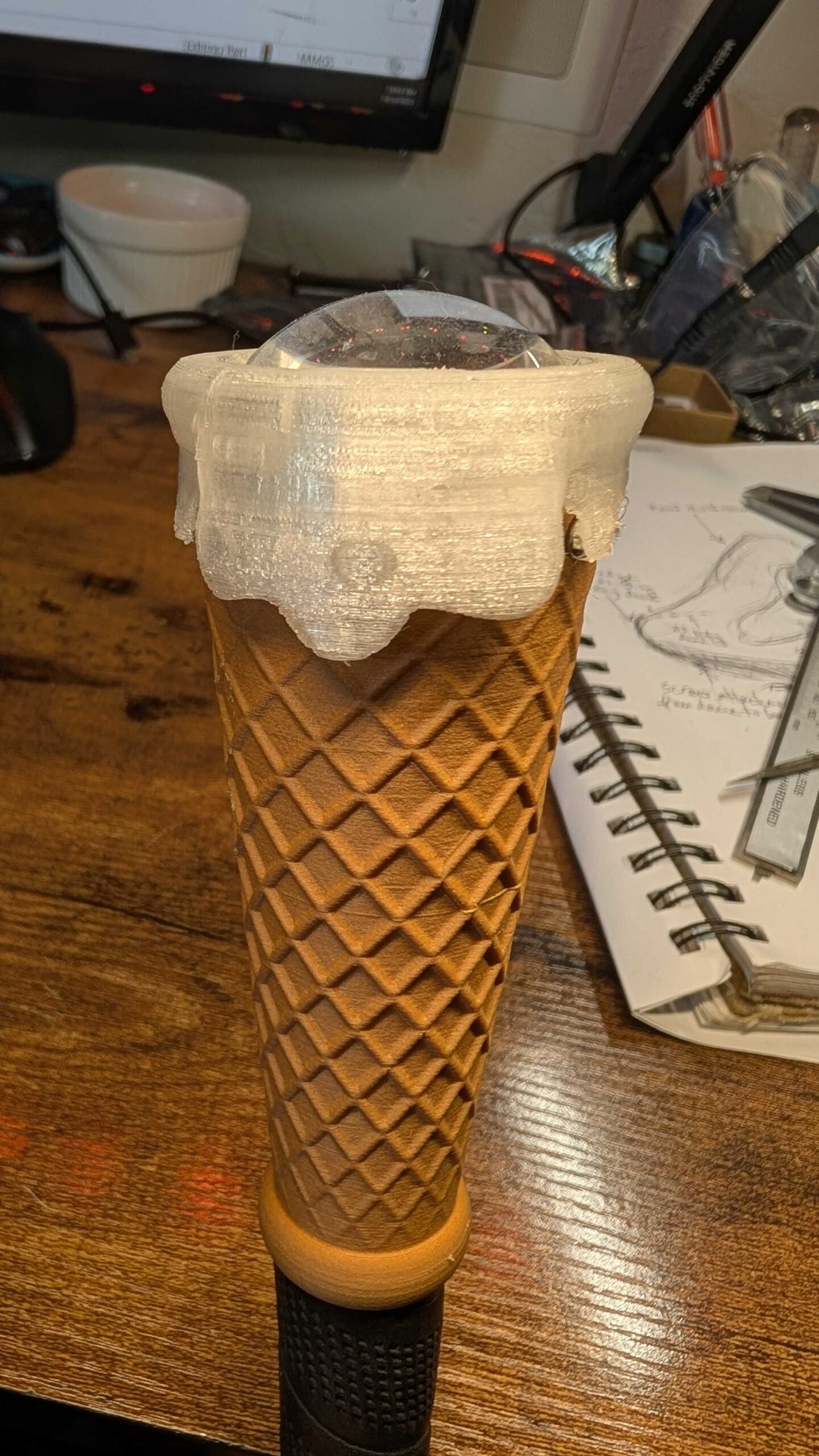
3D-printed TPU “ice cream scoop” housing with embedded acrylic dome lens. Designed with vacant air bumper around PCB and screen for collision protection.
Custom Board, Grippy V2.3
The Grippy PCB is a fully custom circular board designed by Elizabeth Sonder for Palace Games. The circular form factor maximizes space efficiency within the cone enclosure while minimizing obstruction on the grip of the putter. The board’s second iteration carries all active components: microcontroller, LED drivers, display connector, power management, and input switches. Iteration 1 relied on a connected daughterboard oriented downward into the battery space, necessitating a larger enclosure.
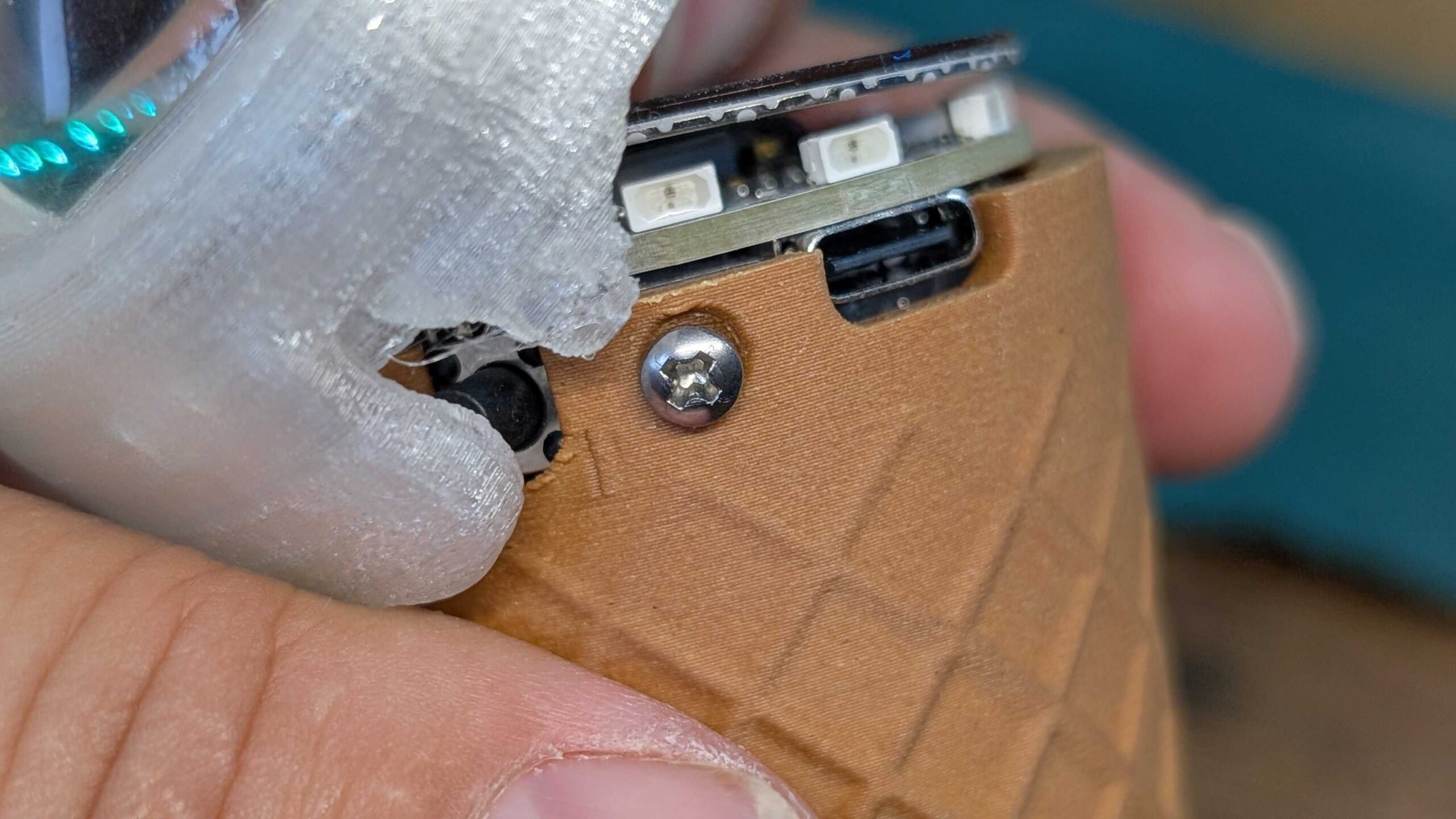
The USB-C port serves dual duty: charging the 18650 cell in the field and flashing firmware updates, eliminating the need to open the device for software maintenance.
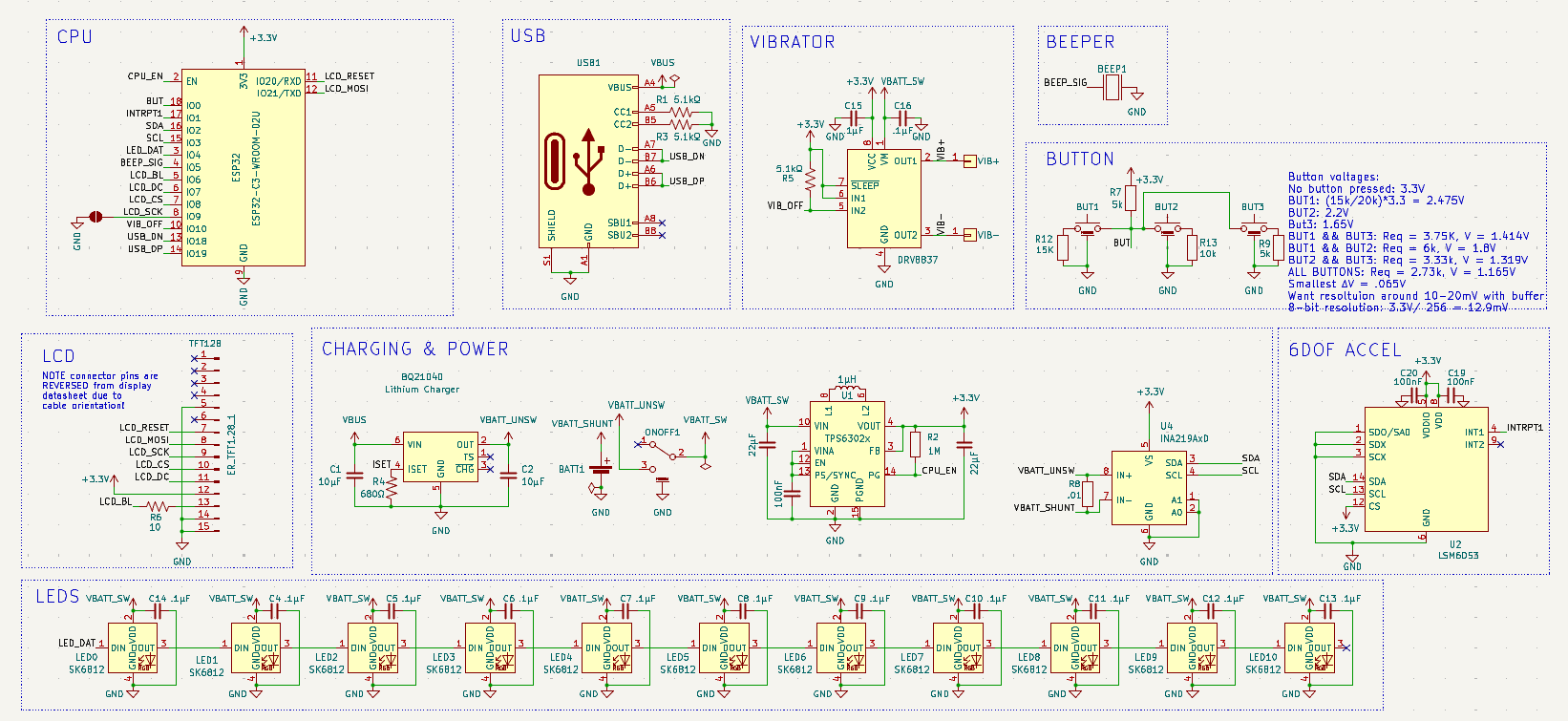
Full Circuit Schematic, V2.5
The Grippy schematic covers the complete electrical design: ESP32-C3 microcontroller, WS2812B LED chain, round TFT display, 18650 power management, USB-C charging circuit, vibration motor driver, passive buzzer, and the three electronically isolated tactile switches.
// Click to view full resolution.
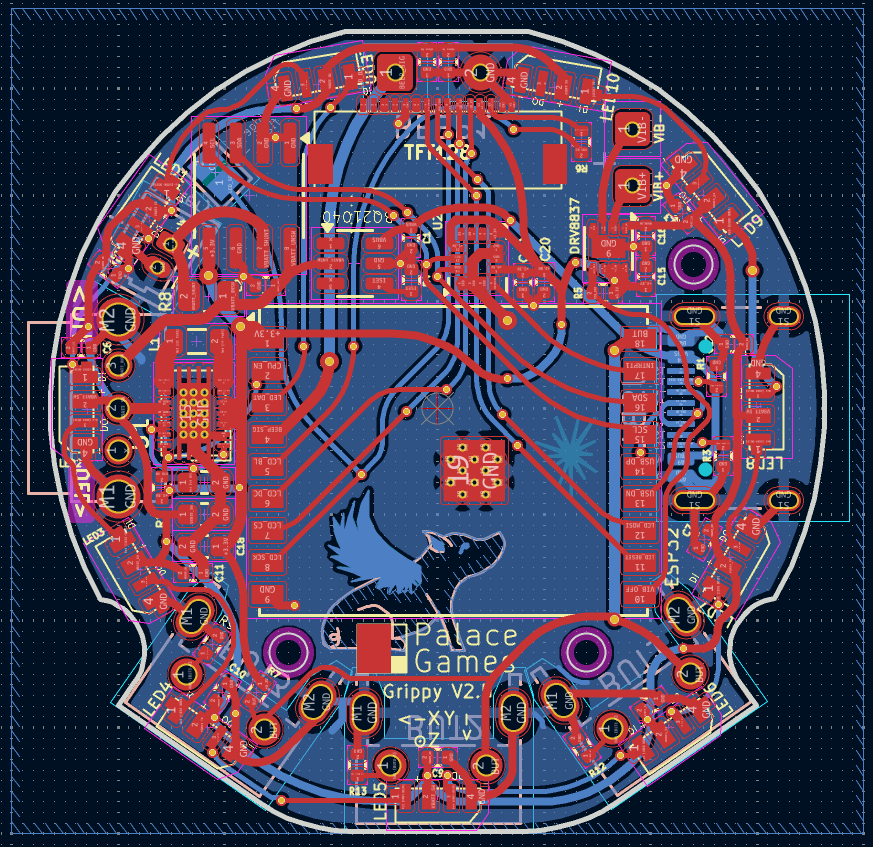
Board Layout, V2.5
The PCB layout for the circular Grippy board, showing component placement, copper pours, and routing. The circular form factor constrains routing decisions throughout — component placement was optimized to keep high-current LED traces on the perimeter and sensitive signal traces away from the motor and buzzer drivers.
// Click to view full resolution.
Redundant Tactile Switch Architecture
// SW1, SW2, SW3
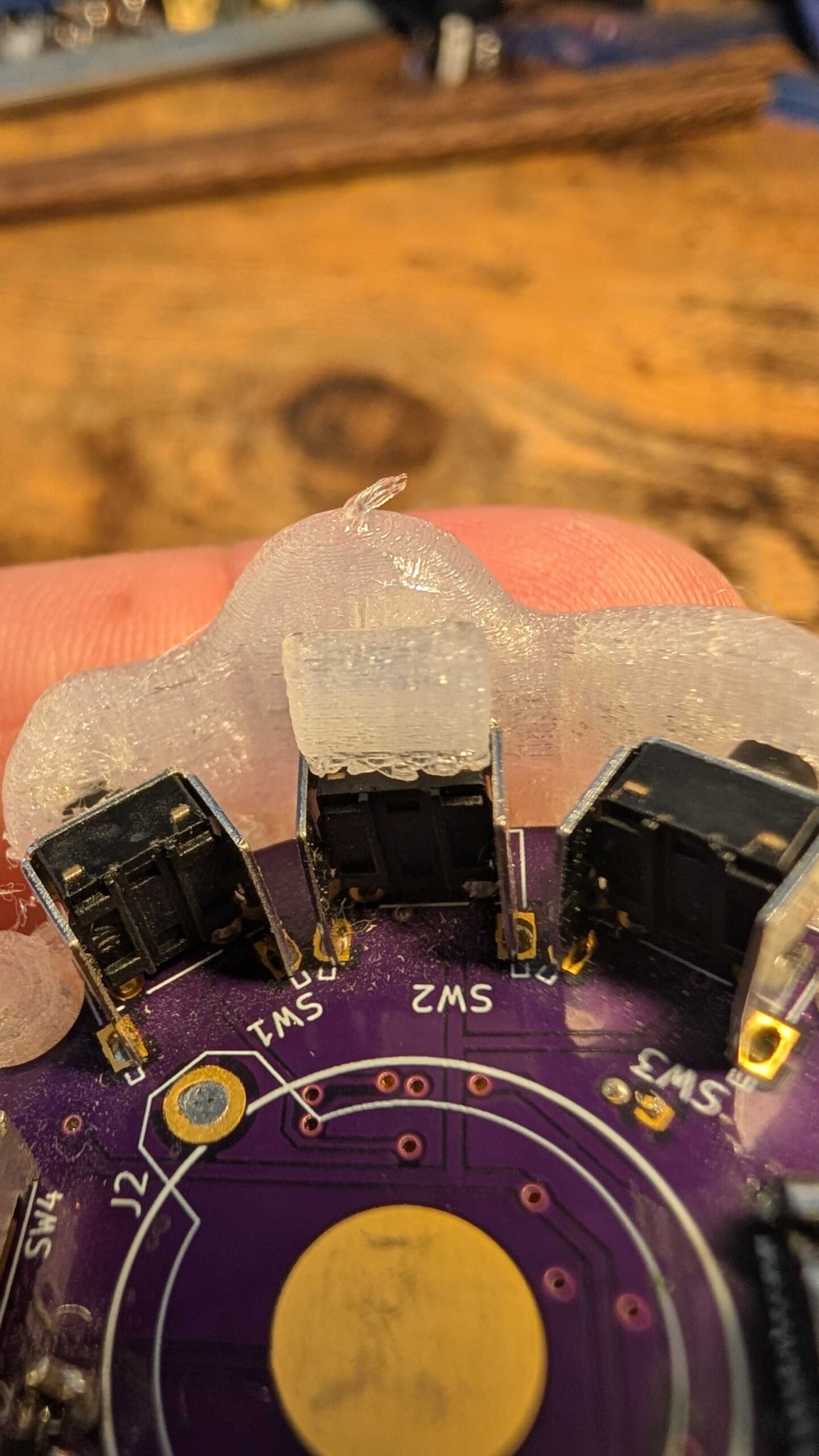
Three tactile switches (SW1, SW2, SW3) are arranged around the top of the puck, each ergonomically accessible along the front edge, situated within an ice cream “drip.” In the current software implementation they behave as a single unified button, providing redundancy: if any switch fails, the other two continue to function, reducing potential hardware failures in the field.
The switches are electronically isolated from each other, meaning they can be addressed independently by firmware. This forward-compatible design allows future software updates to use them as distinct inputs without any hardware changes.
Guiding Players Without Words
A core design constraint for Grippy was that it should help guide players through game events while minimizing necessary text-based instructions. In an immersive experience, reading breaks flow, and can be inaccessible to some players entirely. Grippy solves this through multimodal feedback: LEDs coordinate animations with the physical environment, drawing attention directionally; the display shows contextual game states using dynamic animations that coordinate with gameplay objectives; the vibration motor confirms interactions haptically; and the buzzer provides audio punctuation for key moments.
// LED Animation
10x WS2812B LEDs coordinate with environmental lighting cues in Lollyland, guiding player attention and communicating game state visually.
// Round TFT Display
240x240px circular display shows contextual game information under an acrylic dome. The dome acts as both a protective lens and a visual magnifier.
// Haptic Feedback
An embedded vibration motor delivers physical confirmation of game events, reinforcing feedback through the player’s hands while they grip the putter.
// Audio Feedback
A passive buzzer provides audio punctuation for key game moments, completing a four-channel feedback system: visual, display, haptic, and audio.
// Wi-Fi Connectivity
ESP32-C3 Wi-Fi enables Grippy to send and receive game events and state updates to/from the Lollyland game server in real time.
// Field Serviceability
USB-C charging and firmware flashing without disassembly. Sleep modes enabled by integrated accelerometer in iteration 2 to prolong battery life.
What Grippy Shows
// PCB Design
Full custom circular PCB from schematic to layout. Component selection, power management, multi-peripheral integration, production-scale manufacturing.
// Enclosure Design
3D-printed ice cream cone form factor. Internal scaffolding secures PCB, battery, screen, and haptics for resilience. TPU bumpered lid protects screen and PCB from collisions.
// Embedded Firmware
ESP32-C3 firmware for Wi-Fi connectivity, WS2812B LED animation, display rendering, haptic and audio feedback, and game state management.
// Human Experience Design
Multimodal feedback architecture designed to guide players without written instructions. Coordinated LED, display, haptic, and audio channels for seamless immersion.
// Production Engineering
Designed and shipped 200 units for a live commercial experience. Hardware reliability constraints informed the redundant switch architecture.
// Iterative Development
Iteration 1 deployed and operational. Iteration 2 incorporates enclosure redesign and software interface improvements based on real-world field experience.