Soft Robotic
Actuators
Fluidic elastomer actuators and body-worn harness design for an assistive exoskeleton targeting elbow actuation assistance.
What is a Fluidic Elastomer Actuator?
A fluidic elastomer actuator (FEA) is a soft robotic component made from silicone rubber chambers reinforced with inextensible fibers along their length. When pressurized with air, the restricted walls force the actuator to deflect in a controlled direction — bending rather than expanding uniformly.
For elbow assistance, this bending motion maps naturally onto the arc of the joint. The actuator is compliant against the body, conforming to the user’s anatomy rather than imposing a rigid exoskeleton structure. Elizabeth Sonder designed and fabricated the FEA unit for elbow actuation assistance and the soft harness worn on the body to secure and position it.
| Actuator type | Fluidic Elastomer Actuator (FEA) |
| Material | Silicone rubber chambers, silk fiber reinforcement |
| Mechanism | Inflation-driven bending via constrained elongation |
| Target joint | Elbow (flexion assistance) |
| Operating pressure | 60 psi (inflated state) |
| Harness | Custom soft body harness, worn on upper body |
| Harness material | Soft textile construction |
| Context | HART Lab assistive devices project, UC Berkeley |
| Role | FEA fabrication, harness design and construction |
FEA Construction
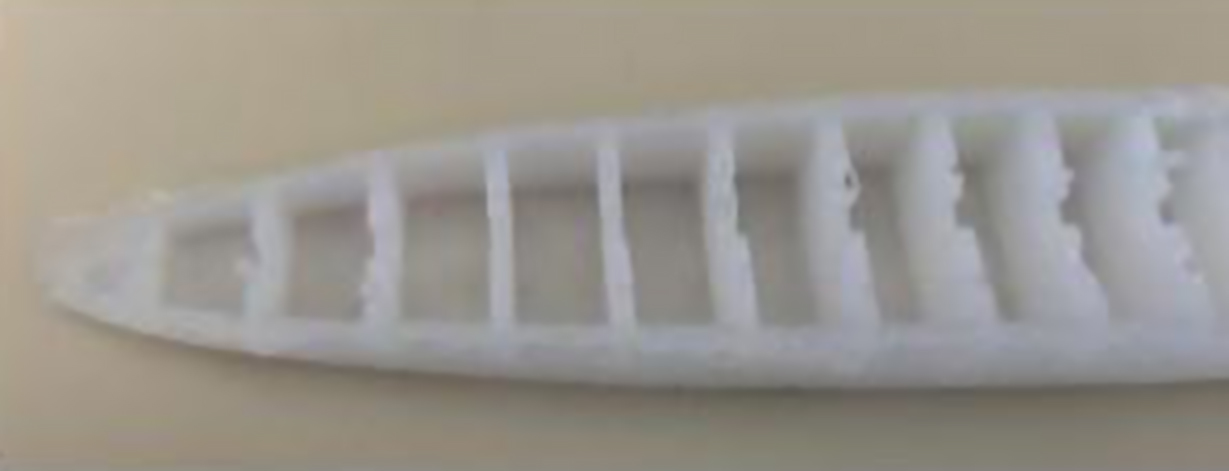
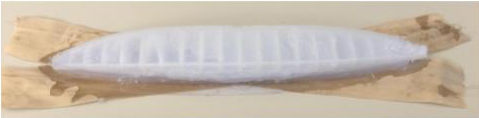
The actuator is built as a series of silicone rubber air chambers arranged along a central spine. Silk fibers wound along the length of each chamber prevent axial expansion, channeling all pneumatic force into a lateral bending deflection. The resulting motion closely follows the arc of the human elbow, making it suitable for wearable assistive applications.
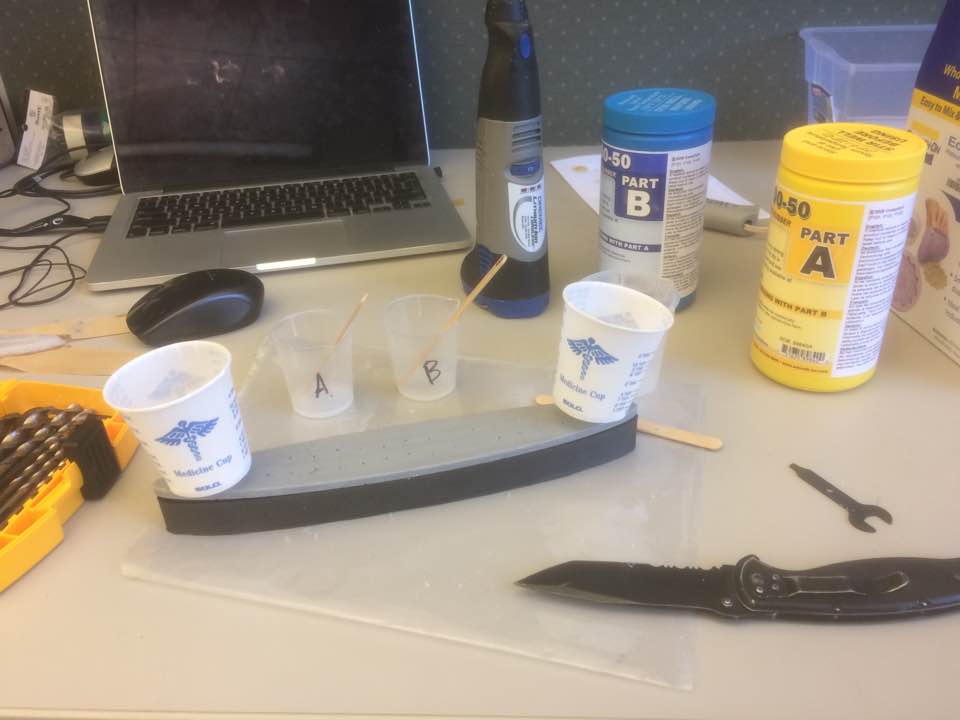
Controlled Deflection via Fiber Constraint
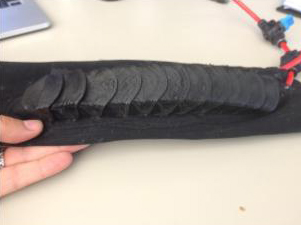
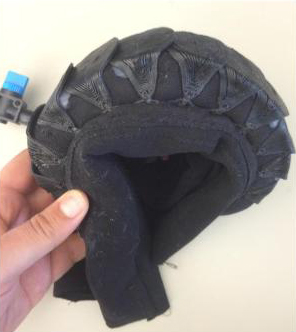
Silicon rubber chambers restricted along the length of the chamber with silk fibers forces deflection in a controlled direction upon inflation.
// Pneumatic Actuation
Air pressure inflates the silicone chambers. Without constraint, they would expand radially. The fiber wrapping redirects this energy into bending.
// Fiber Reinforcement
Silk fibers wound along the chamber length prevent axial elongation, acting as an inextensible constraint that converts internal pressure into a pure bending moment.
// Body Compliance
The silicone construction is soft and compliant at rest, conforming to the user’s arm geometry without rigid contact points or pressure concentrations.
// Joint-Specific Design
This unit was designed specifically for elbow flexion assistance, with chamber geometry and fiber angle tuned for the elbow’s range of motion and torque requirements.
Soft Harness Design
An actuator is only as effective as its coupling to the body. Elizabeth Sonder designed and constructed the soft textile harness that secures the FEA to the user’s upper body and positions it correctly relative to the elbow joint. The harness distributes reaction forces across the torso and upper arm, preventing the actuator from migrating during use while remaining comfortable and adjustable for different body sizes.
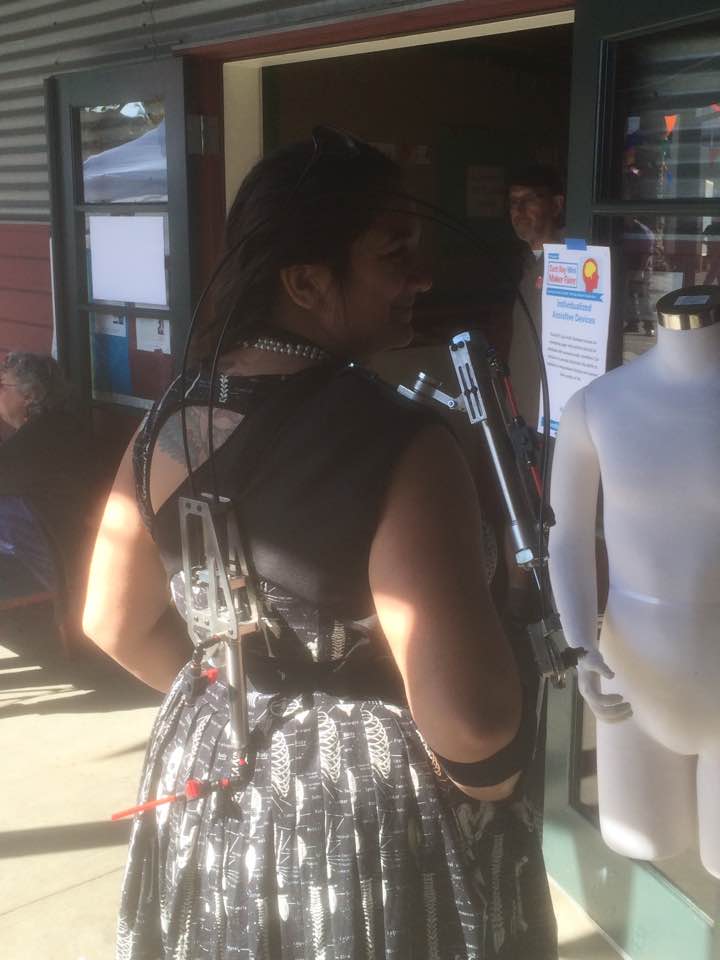

// Design Considerations
The harness is a hybrid soft-rigid construction: a textile body layer distributes pressure across the torso and shoulders for comfort, while a metal strut frame provides the structural stiffness needed to anchor the pneumatic actuators against the reaction forces generated during inflation. Pneumatic tubing runs from a supply along the frame to the FEA positioned at the elbow.
Wearable assistive devices must balance compliance with the body surface against the structural rigidity needed to transmit actuation forces to the target joint. A harness that flexes too much under load allows the actuator to migrate, reducing assist effectiveness. The strut-and-textile approach addresses this directly: soft where it contacts skin, rigid where it carries load.
Assistive Devices at HART Lab
The HART Lab’s assistive devices work sits within a broader research program on individualized human models for cyberphysical interactions, led by Professor Ruzena Bajcsy. The pipeline moves from measurement (kinematics and dynamics captured via 3D vision systems) through prescription (customized assistance profiles) to intervention — the physical actuation system that Elizabeth contributed to.
Kinematics & Dynamics
3D vision (MS Kinect) captures individualized upper-limb motion and reachable workspace.
Customise Assistance
Patient-specific models determine the optimal stiffness and assist profile for the target joint.
Optimise Actuation
FEAs deliver variable-stiffness pneumatic assistance tuned to the individual’s needs.
What This Work Shows
// Soft Robotics Fabrication
Design and fabrication of fluidic elastomer actuators from silicone rubber, including chamber molding, fiber reinforcement winding, and pressure testing.
// Wearable Device Design
Custom soft harness construction for body-worn assistive devices. Force transfer, fit, and comfort considerations for upper-body wearables.
// Human-Centered Engineering
Designing hardware that interfaces directly with the human body, accounting for anatomical variation, comfort, and the biomechanics of the target joint.
// Research Lab Contribution
Hardware contribution to a UC Berkeley research program on individualized cyberphysical assistive systems, under Professor Ruzena Bajcsy.