The Edison Room – Elizabeth Sonder
The Scintillator — The Edison Room
Palace Games — San Francisco, CA

The Edison Room

A 100-minute escape room set in Thomas Edison’s secret 1915 World’s Fair laboratory. A fully reactive gamespace, three expanding rooms, magical electrical devices, and 34,000 LEDs.

By Elizabeth Sonder, Lead Engineer & Environment Designer

Spoiler Warning. This page documents the engineering and design of The Edison Room in detail, including mechanical reveals, room transformations, and puzzle mechanics. If you plan to play and want to go in fresh, book your session first.

~100 Min 4–8 Players Live & Booking Golden Lock-In Award 2018

The Edison Room is a large-scale, fully reactive escape room at Palace Games in San Francisco. Players discover Thomas Edison’s secret study hidden within the Palace of Fine Arts, then uncover his electrified laboratory beyond: a space that grows as they solve, twice doubling in size across three swinging-wall reveals, and packed with 34,000 LEDs woven through every surface, prop, and puzzle. I was one of five on the design team, responsible for translating brainstorming sessions, puzzle ideas, and game flow into real, tangible, buildable spaces, and for leading the production team that built them.

A Room That Grows as You Solve It.

The Edison Room’s narrative frames players as potential heirs to Thomas Edison’s empire. Having deemed his own children unsuitable successors, Edison embedded a series of escalating challenges into his hidden 1915 World’s Fair study. An entry-level puzzle gives way to his electrified laboratory, which expands twice more through successive swinging-wall reveals as players progress.

The experience is built around a philosophy of physical interaction. Players stand on pressure-sensitive floors, carry fragile light-trapping devices across LED mazes, and trigger chain reactions that illuminate the room around them. The gamespace responds continuously to what they do and where they stand.

I was one of five on the design team for The Edison Room. My role was to translate brainstorming sessions, puzzle ideas, and game flow into real, tangible, buildable spaces, and then to lead the production team that built them. The engineering and environment design across the full scope of the room (the puzzle electronics, the LED systems, the wall reveal mechanisms, the set fabrication) flowed from that translation work.

The Edison Jar was my project specifically. From concept sketch to finished prop to electronics to in-world fiction, that section of the room was mine alone, designed, engineered, and built by me.

“Palace Games succeeded in blurring the lines between real life and video game.”

— Lisa Spira, Room Escape Artist
VenuePalace Games, San Francisco, CA
Experience TypeFully reactive escape room
Duration~100 minutes
Group Size4–8 players, private
Total LEDs34,000 individually addressed, throughout the entire room
Room Expansions3 swinging-wall reveals — room triples in size over the experience
SensorsRFID, capacitive touch, pressure-sensitive floor tiles, continuity detection
DifficultyAdaptive — adjusts to team ability in real time
Key PropsThe Edison Jar (original design), Photon Plasma Repeater tubes, Scintillator
Fictional Patents2 — both sketched and designed by Elizabeth Sonder
My RoleOne of five designers. Responsible for translating concepts into buildable spaces, and leading the production team that built them
StatusLive — palace-games.com
Build Highlight 01

The Parlor: RFID, Capacitive Touch, and a Hidden Door

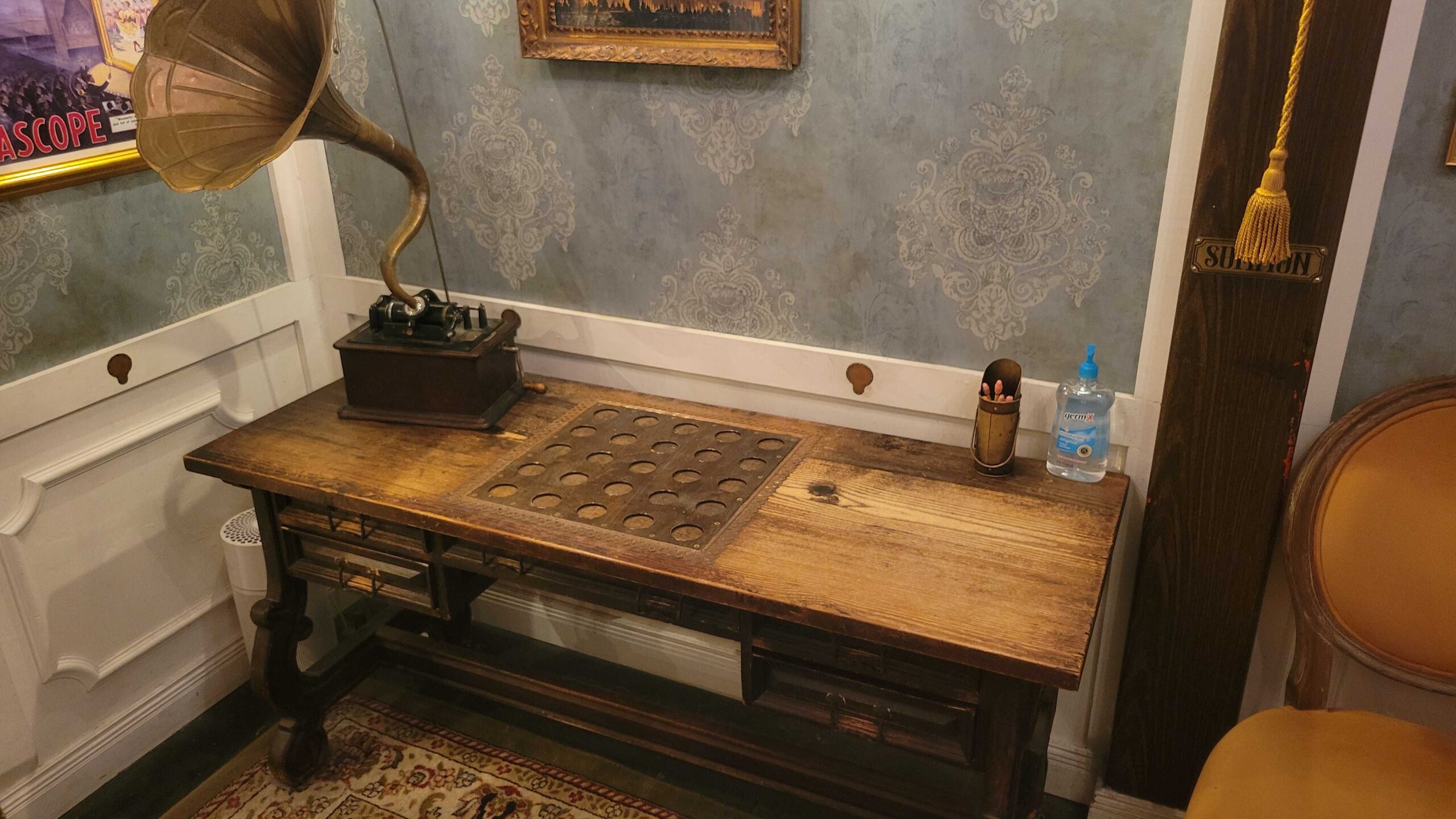
The Edison Room begins in Edison’s parlor — a cozy, wallpapered study with a wooden desk, a phonograph, and period-appropriate wall hangings. It reads as a classic escape room opening, but reveals something much more magical.

The first puzzle combines RFID and capacitive touch sensors embedded invisibly into the parlor furniture. Players interact with objects around the room and on the desk. Some items responding to touch, others requiring specific items to be placed in precise positions, without any outward indication that the surfaces are instrumented at all. The interaction feels like discovery rather than puzzle-solving.

On solving, a hidden door slides open automagically, revealing the electrified laboratory beyond. The transition from genteel parlor to the workshop that awaits is the room’s first major reveal.

Edison's parlor — the RFID and capacitive touch puzzle desk

// The parlor. An RFID puzzle is embedded in the desk surface and capacitive touch sensors are placed around the walls. On solving, the hidden door to the laboratory slides open.

Build Highlight 02

The Laboratory: LED-Embedded Devices of Wonder

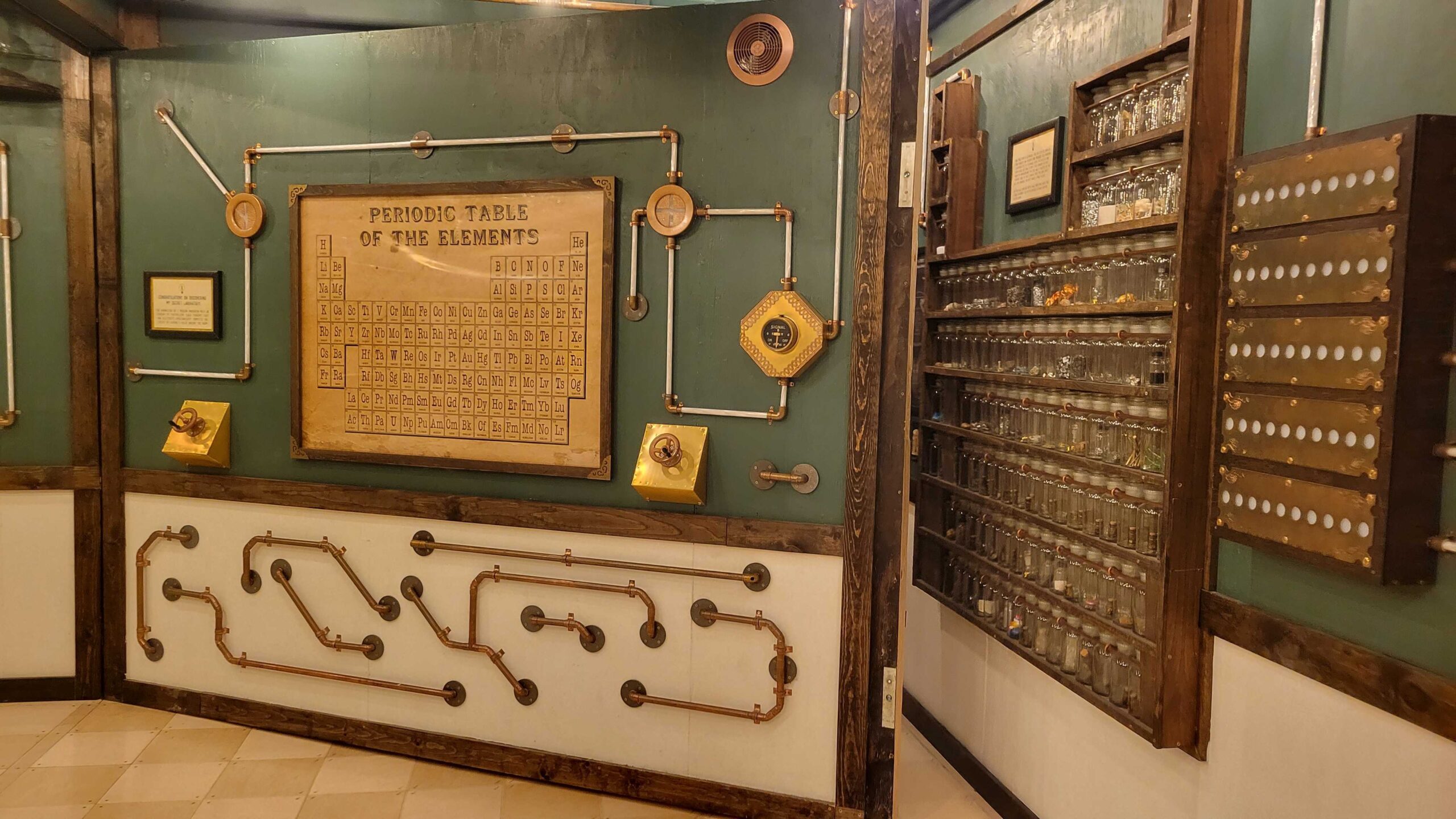
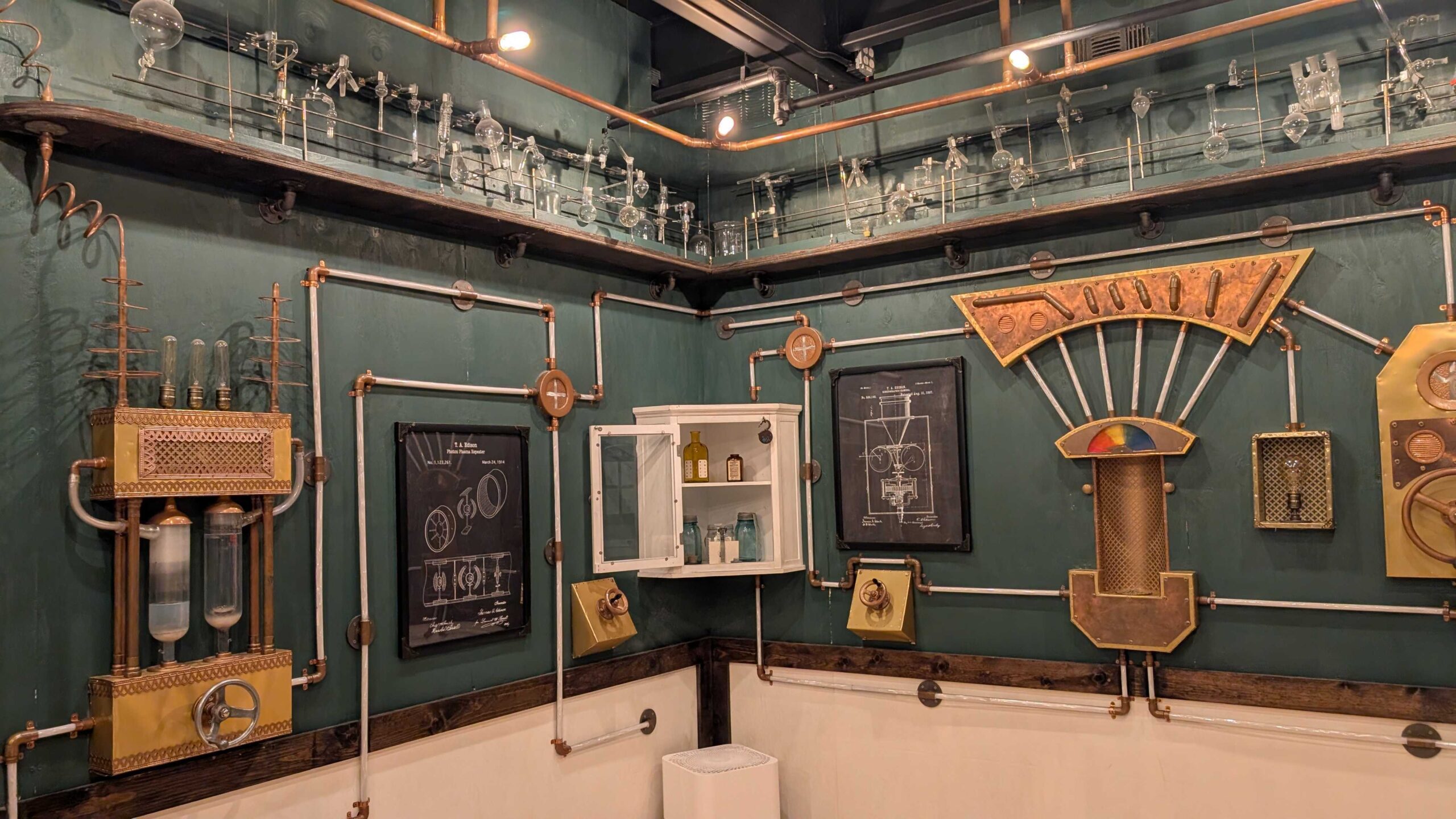
Beyond the hidden door is the electrified workshop: a teal-painted room lined floor to ceiling with copper pipes, custom-built brass instruments, patent drawings, and an upper shelf of suspended glassware (housing a parallax puzzle of my own design). Every device in the room is LED-embedded, with light used to guide player attention and communicate puzzle state throughout.

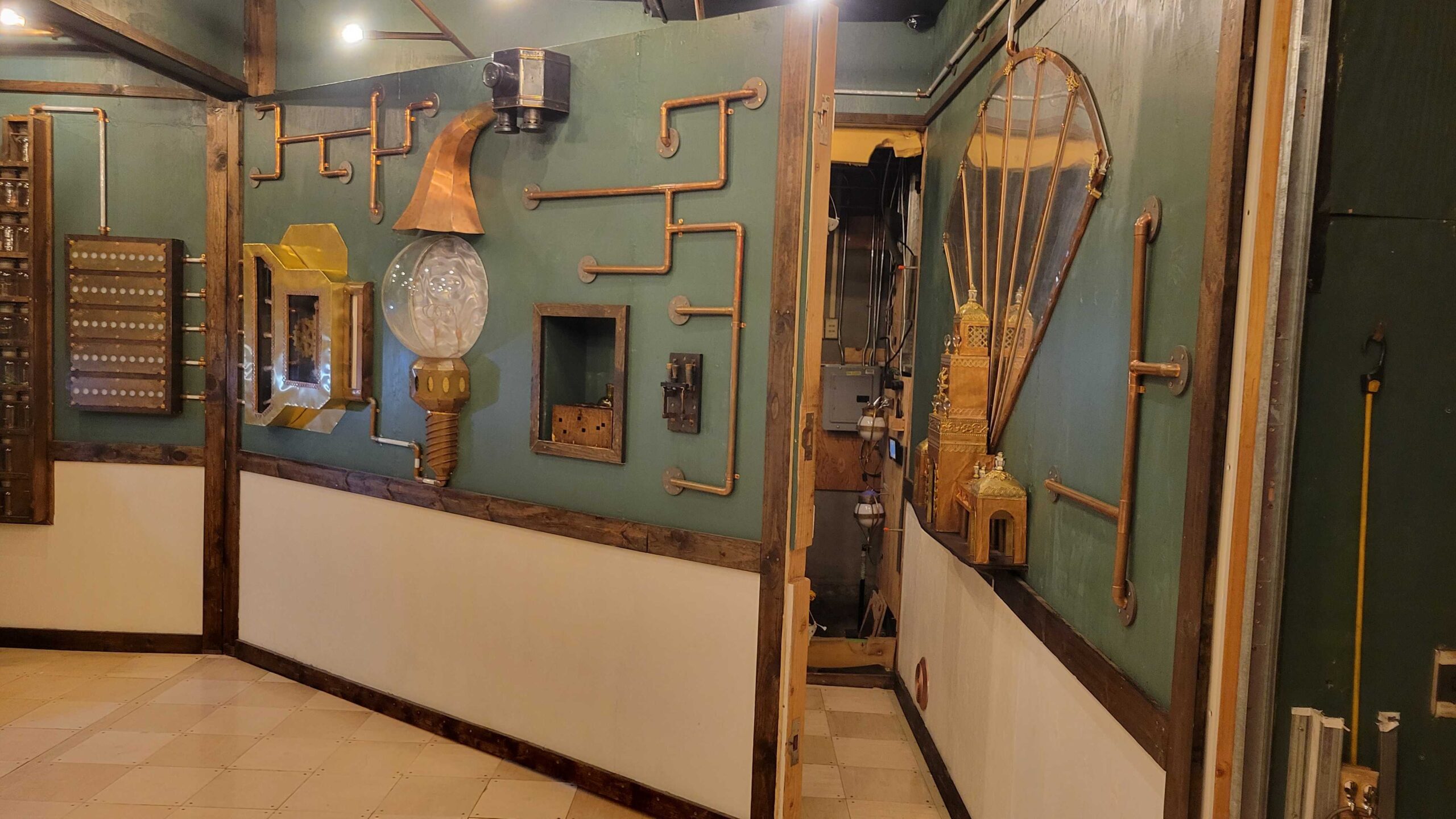
The first laboratory quadrant houses the first swinging wall. On solving the room’s puzzle, the lights go dark and in an instant, an entire wall swings away from the players, doubling the size of the space. Clearances, precise engagement mechanisms, and careful weighting and balancing were paramount to making this work repeatedly and reliably over many years, and still going. The wall carries set dressing on both sides; when open, it reveals the next section of the experience without any visible break in the environment.

The Edison Room laboratory

// The laboratory. Copper piping, brass instruments, suspended glassware, and LED-embedded puzzle devices throughout. A patent drawing for the Edison Jar is visible center-left.

First swinging wall, manually disengaged to mid-position for maintenance

// First swinging wall, manually moved to mid-position during maintenance. In play, it swings away in darkness as the room doubles in size.

Build Highlight 03

The Pressure-Sensitive Floor and the Wall of Jars

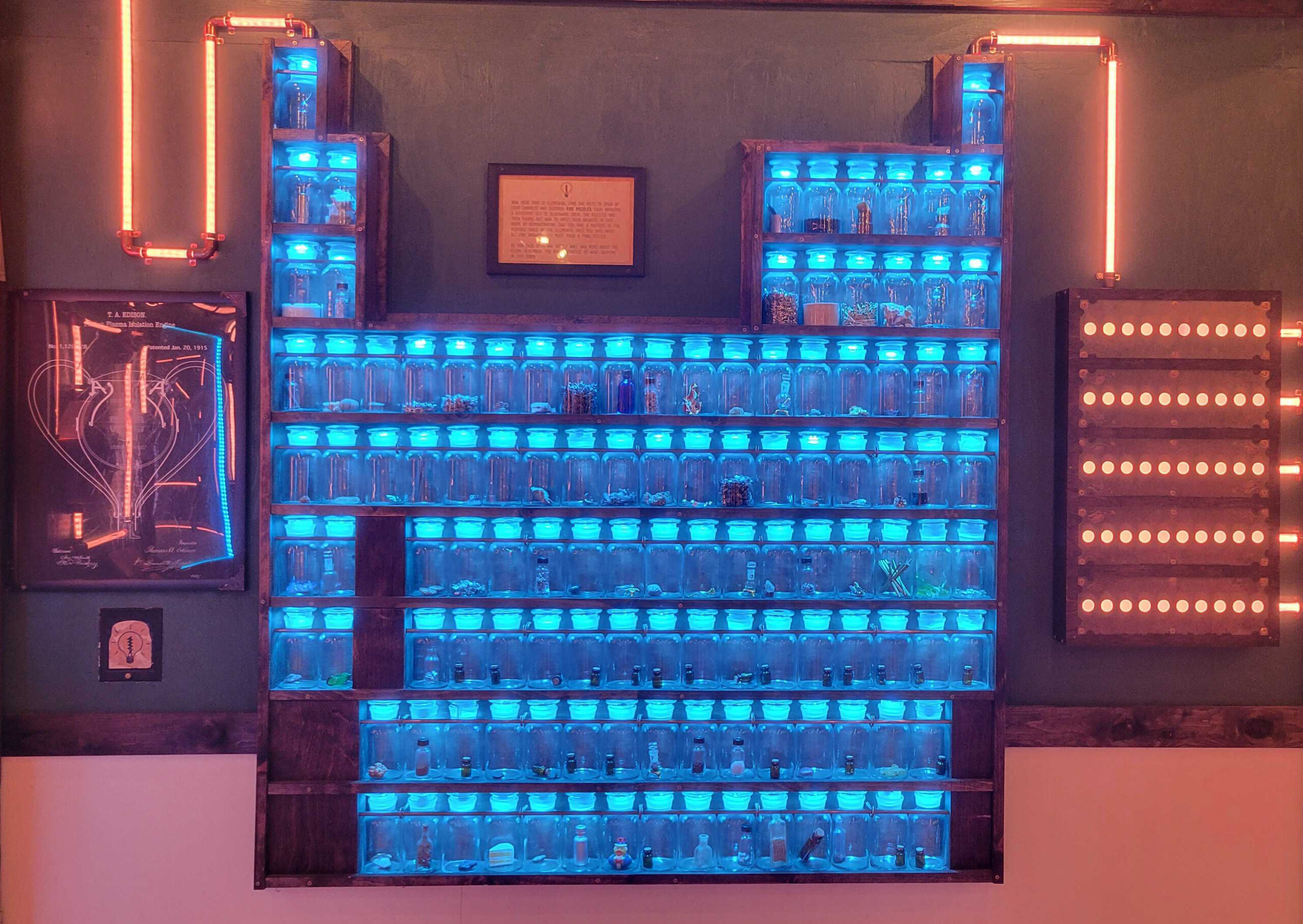
In the section beyond the first wall reveal, players discover that the floor is pressure-sensitive. Certain tiles act as buttons when stood upon, activating a corresponding jar in a floor-to-ceiling wall of jars arranged in the shape of the periodic table. Each tile is built from squares of aluminum sandwiched around Velostat (a piezoresistive material whose electrical resistance drops under pressure), creating a sensor that registers weight without any moving parts. The control system reads the resistance change when a player stands on a tile and triggers the corresponding jar’s LED jewel. Each jar contains a 7-pixel LED jewel (the same jewel type embedded in each floor tile), which lights up when its corresponding tile is activated. Players use the floor itself to solve the next puzzle.

The wall of jars is one of the room’s most visually striking elements: the periodic table shape rendered in illuminated glass, twinkling as players move through the space. The puzzle asks players to coordinate their positions deliberately across the floor to produce a specific pattern in the jars above.

On solving, the second wall reveal happens, this time with the lights still on. The room doubles in size again before the players’ very eyes.

Wall of jars arranged as the periodic table, glowing blue

// The wall of jars, fully illuminated. Each jar contains a 7-pixel LED jewel activated by its corresponding pressure-sensitive floor tile. The arrangement mirrors the periodic table.

Second swinging wall, disengaged from mechanism, mid-position

// Second swinging wall, disengaged from its mechanism for maintenance. In play, this reveal happens in full light. Players watch the room expand in front of them as the wall latches into place securely and safely.

Build Highlight 04

The Edison Jar: A Personal Project, Designed from Scratch

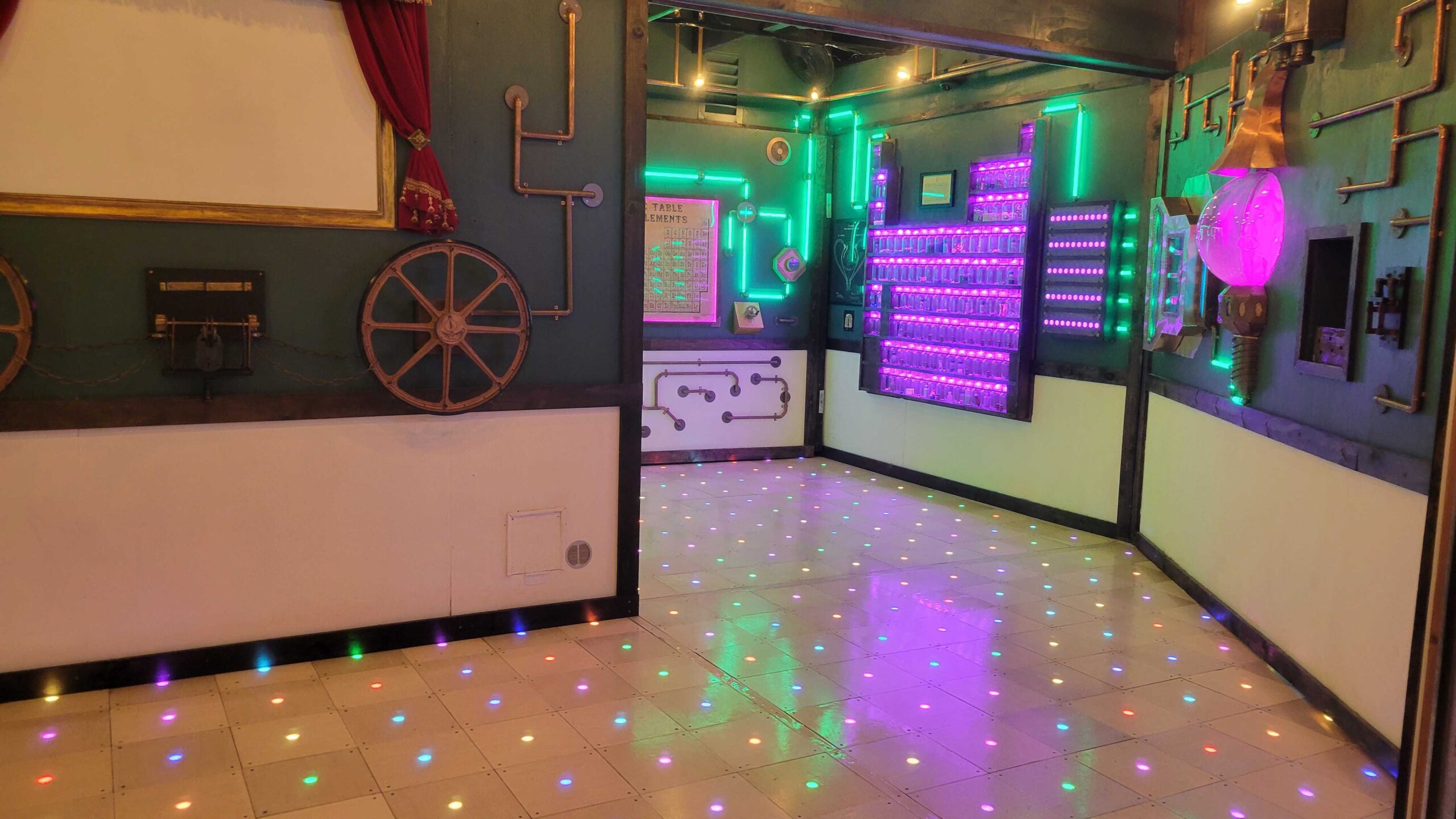
The third section of the laboratory is my favorite, and the part of the room that was entirely mine. The Edison Jar is a fictional invention of Edison’s, but is in actuality my own project from start to finish: concept, design, prop fabrication, electronics, and in-world fiction. Players discover that the floor in this section is not only pressure-sensitive but LED-embedded as well: every tile glows, turning the entire floor into a live, interactive light field.

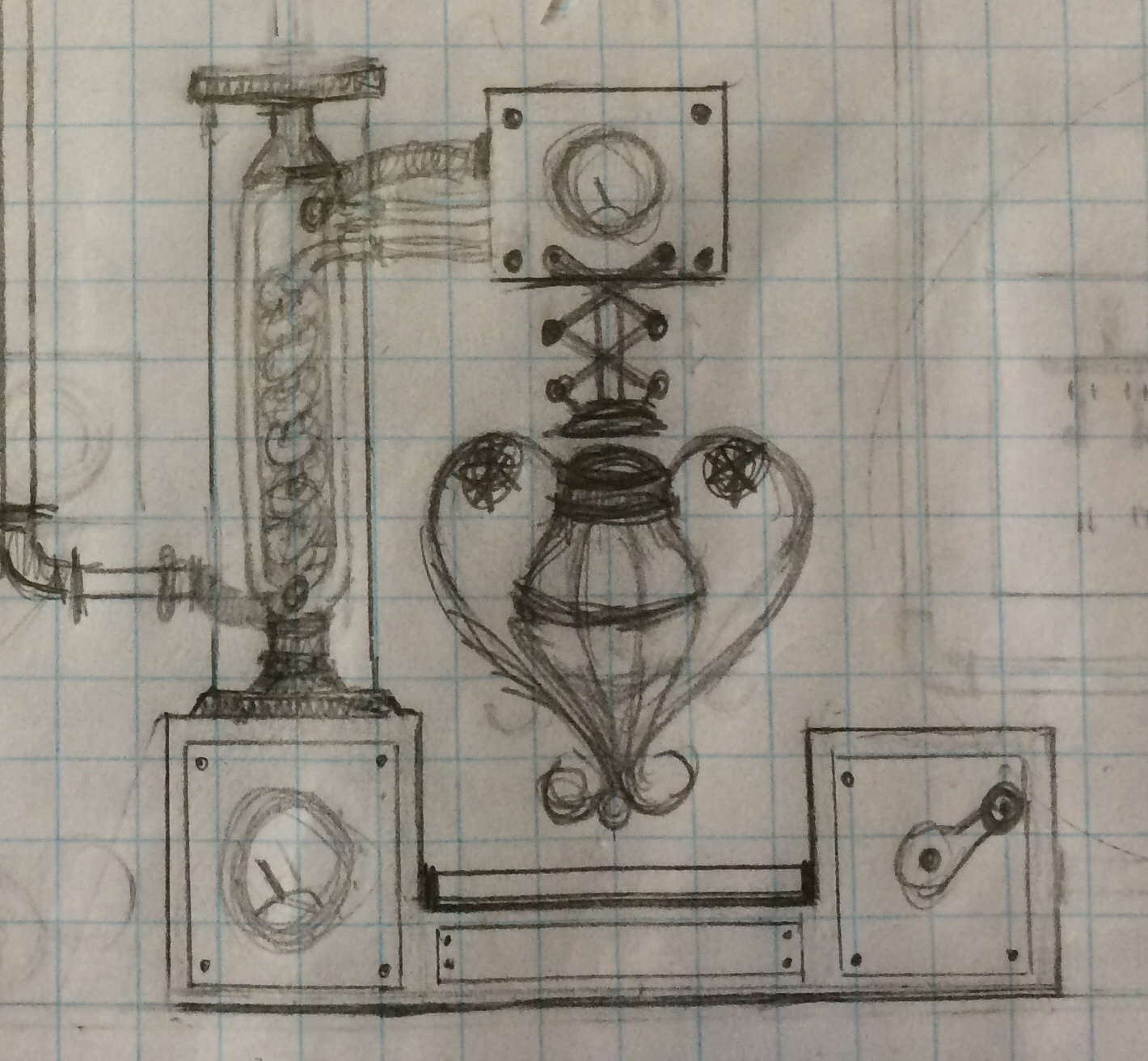
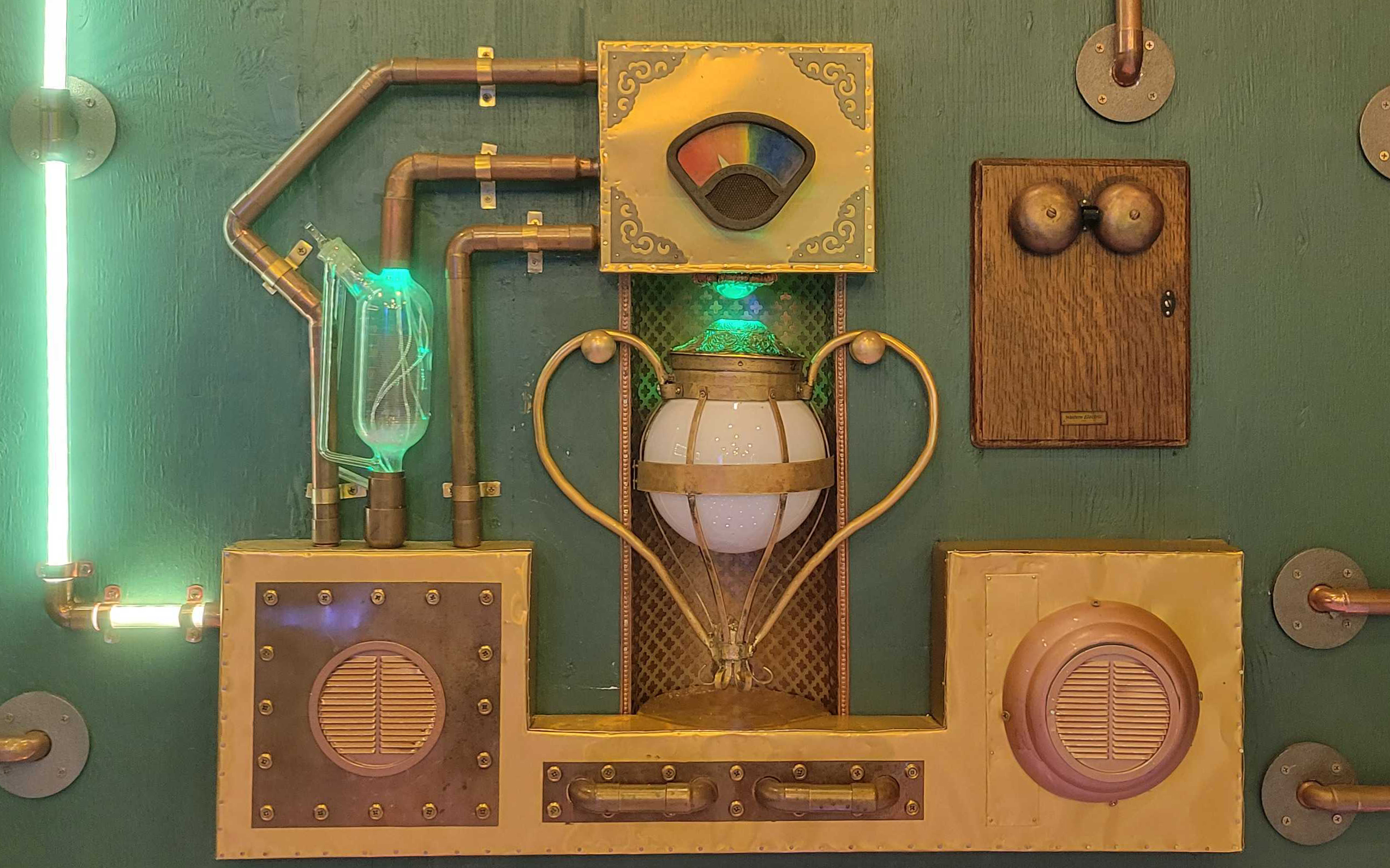
The Jar is a “photon plasma isolation engine:” a glass-bulbed brass vessel with two heart-shaped handles that arc outward to a pointed bottom, preventing it from being set down. This was a deliberate physical design decision: the point forces players to carry it continuously and cooperatively. The glass bulb makes it feel appropriately fragile. A brass enclosure protects the electronics inside and serves as the circuit-completion mechanism for position sensing in its two receptacles. Two metal pegs, one for each handle, complete a circuit when the Jar is placed in either of its stations, allowing the system to detect its presence via continuity.

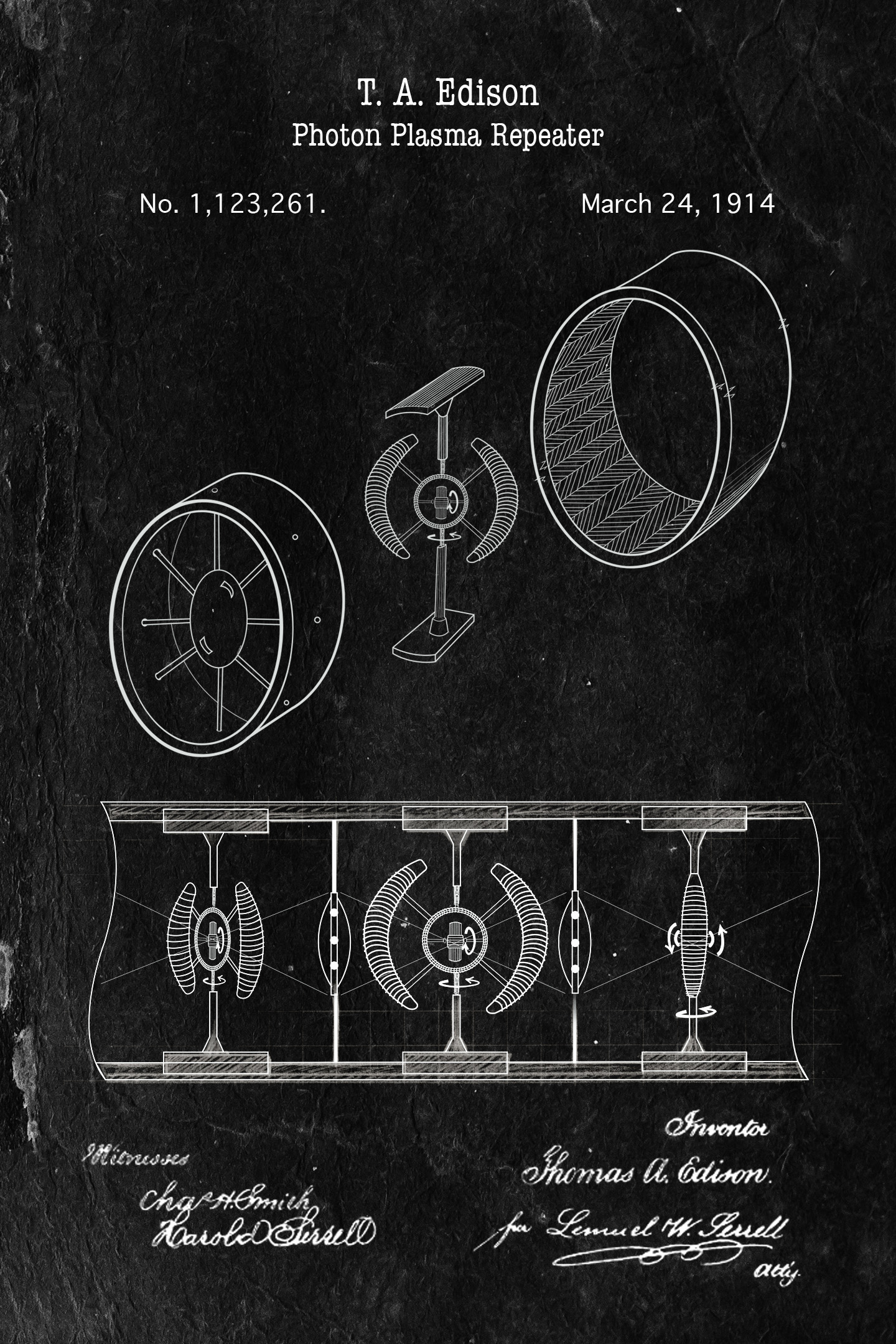
The Jar appears to “charge up” with light from a charging station on the wall. Players then carry it carefully across the room, navigating a maze created by the pressure-sensitive, lit floor tiles. Placing it in the discharge station at the far end releases the trapped light through the Photon Plasma Repeater tubes (acrylic tubes with DotStar LED strips pulled through them and diffusion plastic lining the inside, routed around the room as an in-world conveyance system for light) and into the Scintillator, lighting one of its six segments. Players navigate six “mazes” to illuminate all sections and solve the puzzle. It’s a very kinetic game, and players enjoy it a great deal.

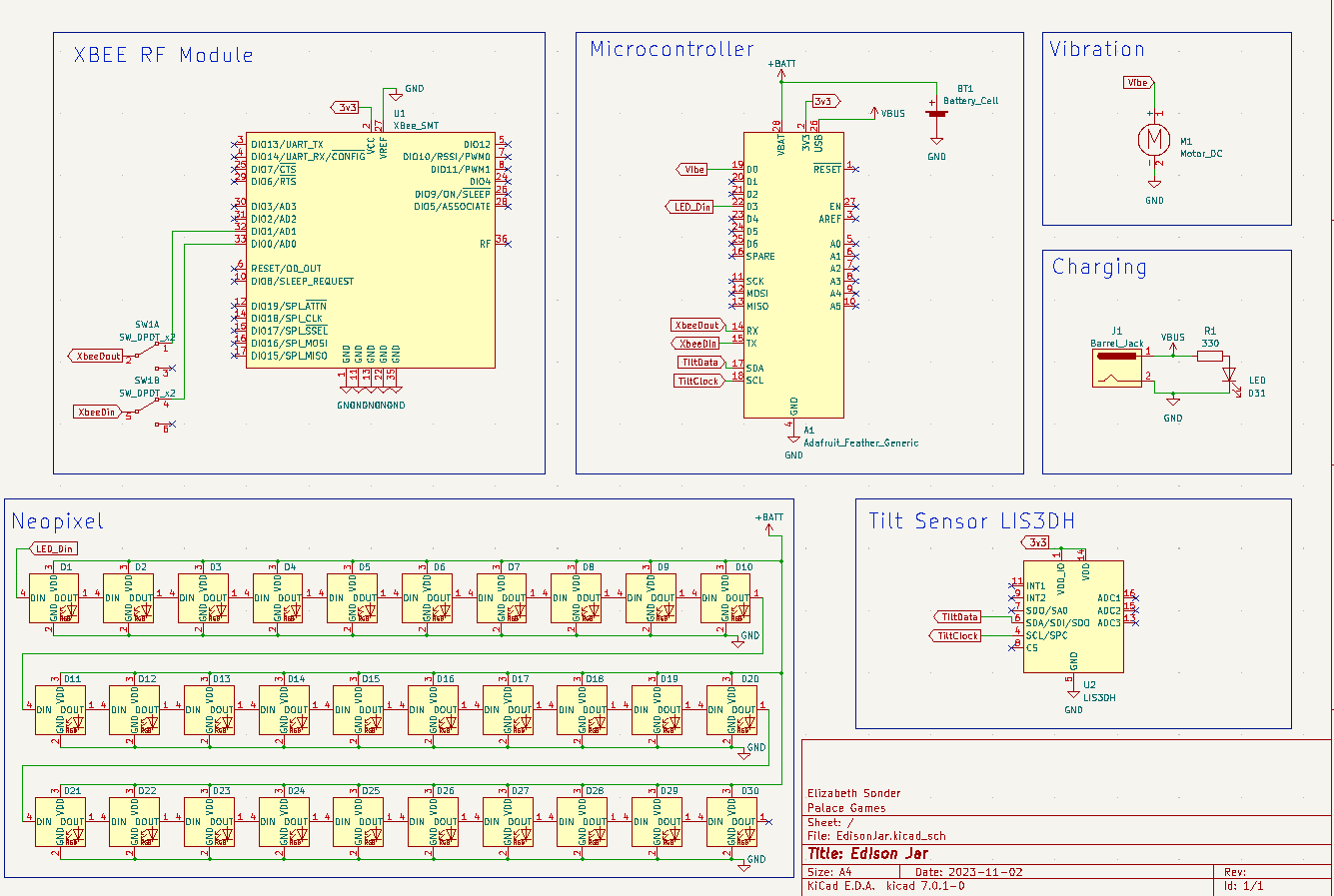
The Jar was originally built with an Arduino Uno, an accelerometer, addressable LEDs, and six NiMH batteries in a brass-and-glass vessel, reflective of my engineering skills at the time. the Jar was later rebuilt as my skills developed. The revised schematic uses an Adafruit Feather microcontroller, an XBee RF module for wireless communication, a LIS3DH tilt sensor, 30 Neopixel LEDs, and a vibration motor, with more appropriate (and lighter!) batteries for this application.

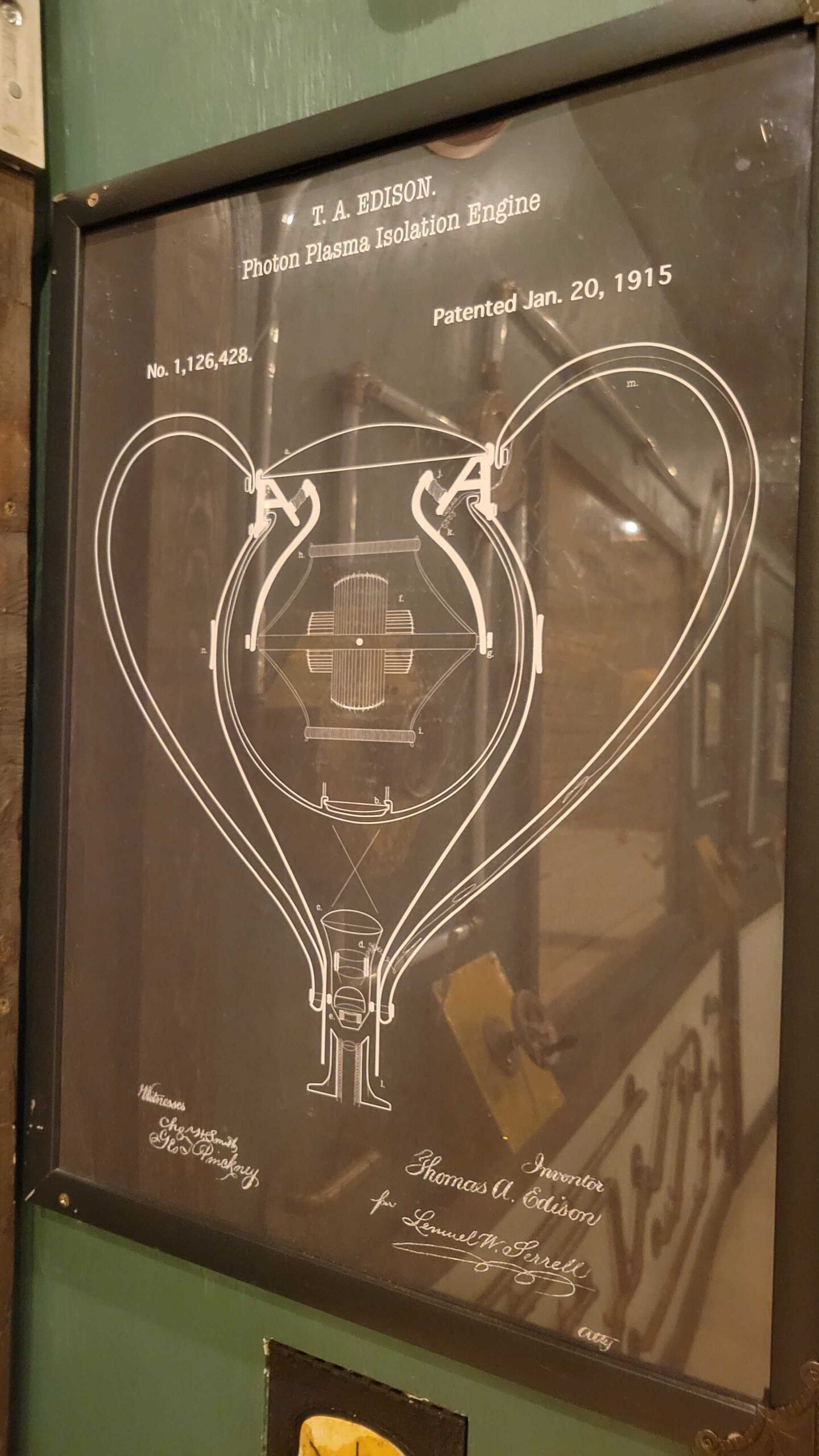
I also designed two fictional patents displayed on the laboratory walls alongside real Edison patents: one for the Edison Jar (the “Photon Plasma Isolation Engine,” No. 1,126,428, Jan. 20, 1915) and one for the Photon Plasma Repeater tubes (No. 1,123,261, March 24, 1914). Both were sketched and illustrated by me.

LED-embedded pressure-sensitive floor tiles, fully lit

// Every floor tile is both pressure-sensitive and LED-embedded. Players navigate the Jar across this lit maze to the discharge station.

Original concept sketch of the Edison Jar

// Original concept sketch. The heart-shaped handles, pointed bottom, and glass bulb were all deliberate design decisions made at this stage.

Fictional Edison Jar patent — Photon Plasma Isolation Engine — hung on the lab wall

// “T. A. Edison — Photon Plasma Isolation Engine.” Fictional patent No. 1,126,428, designed and illustrated by Elizabeth Sonder, hung alongside real Edison patents.

The Edison Jar in its charging station

// The finished Jar in its charging station. Two metal holders complete a circuit through the brass handles to detect the Jar’s presence. A “photon gauge” sits above.

Fictional Photon Plasma Repeater patent illustration

// “T. A. Edison — Photon Plasma Repeater.” Fictional patent No. 1,123,261, designed and illustrated by Elizabeth Sonder. The tubes were built from DotStar strips inside acrylic with diffusion plastic. Later builds use NeoPixel.

KiCad schematic for the revised Edison Jar electronics

// Revised Edison Jar schematic (KiCad, 2023). Adafruit Feather microcontroller, XBee RF module, LIS3DH tilt sensor, 30 Neopixel LEDs, vibration motor, and battery charging circuit.

Build Highlight 05

The Scintillator: Six Segments, Lit One by One, and a Hidden Key

Like the Edison Jar, the Scintillator was entirely my own: concept, design, fabrication, and electronics.

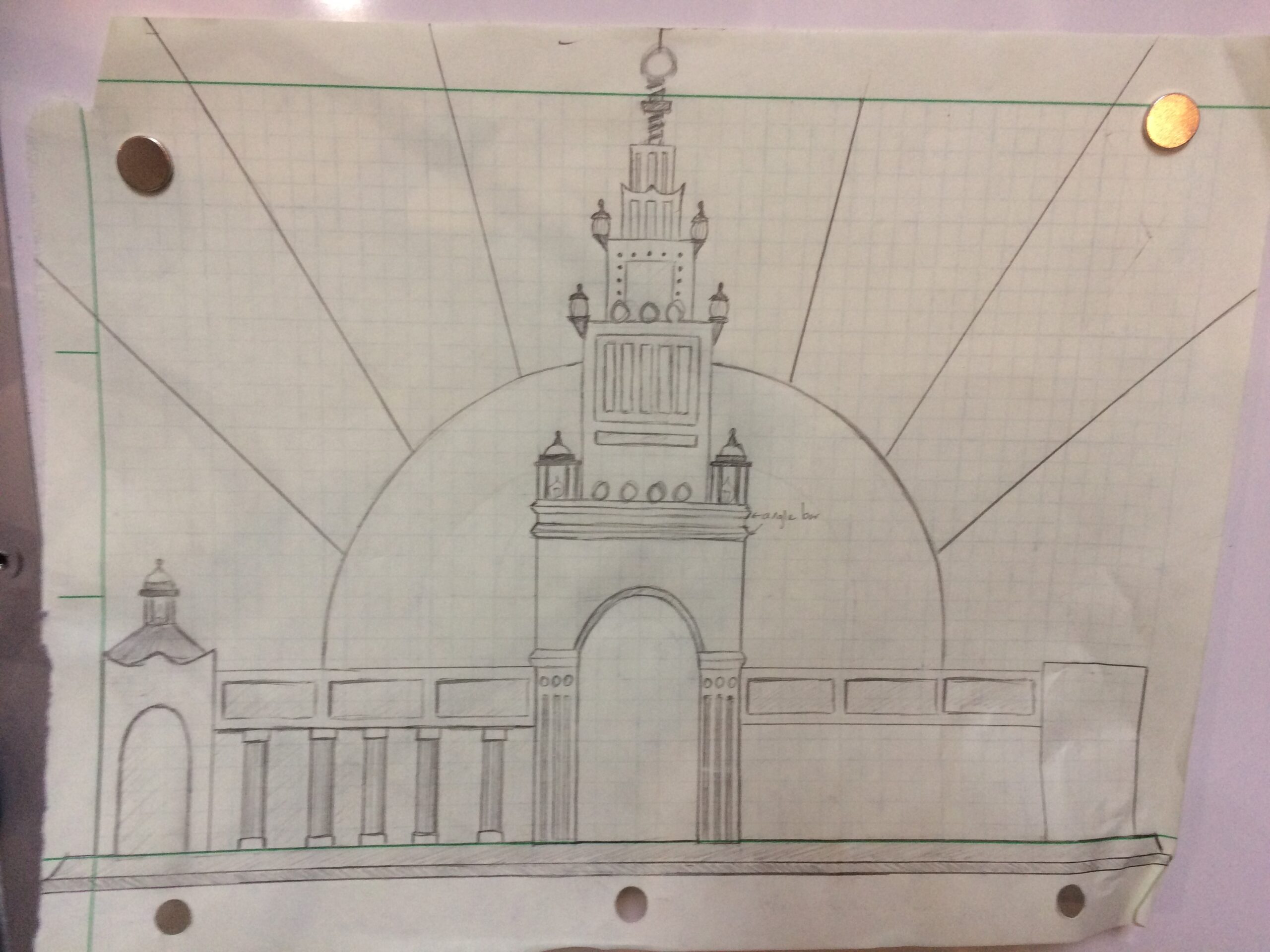
The Scintillator is the visual culmination of the Jar puzzle. It’s a large-scale architectural light installation built around the central tower of the laboratory’s rear wall, inspired by an actual light display at the 1915 World’s Fair. It is divided into six independently controlled chromatic segments, each one lighting in sequence as players complete each Jar-carrying run and place it in the discharge station.

Light travels from the discharge station to the Scintillator via the Photon Plasma Repeater tubes. Each tube feeds one segment of the rainbow wedges. Players watch each section of the Scintillator alight in turn, with the full rainbow activation as the puzzle’s completion state.

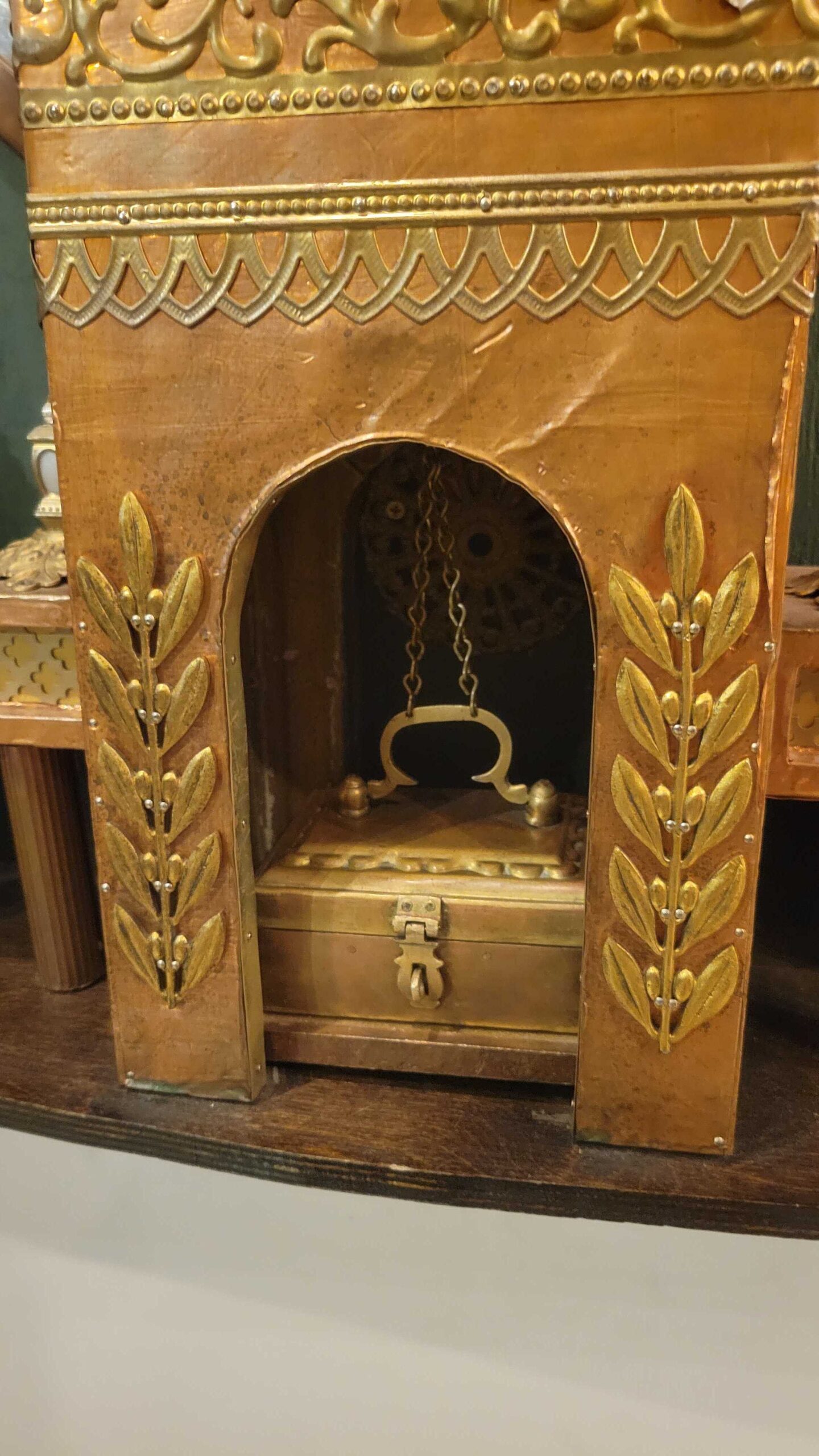
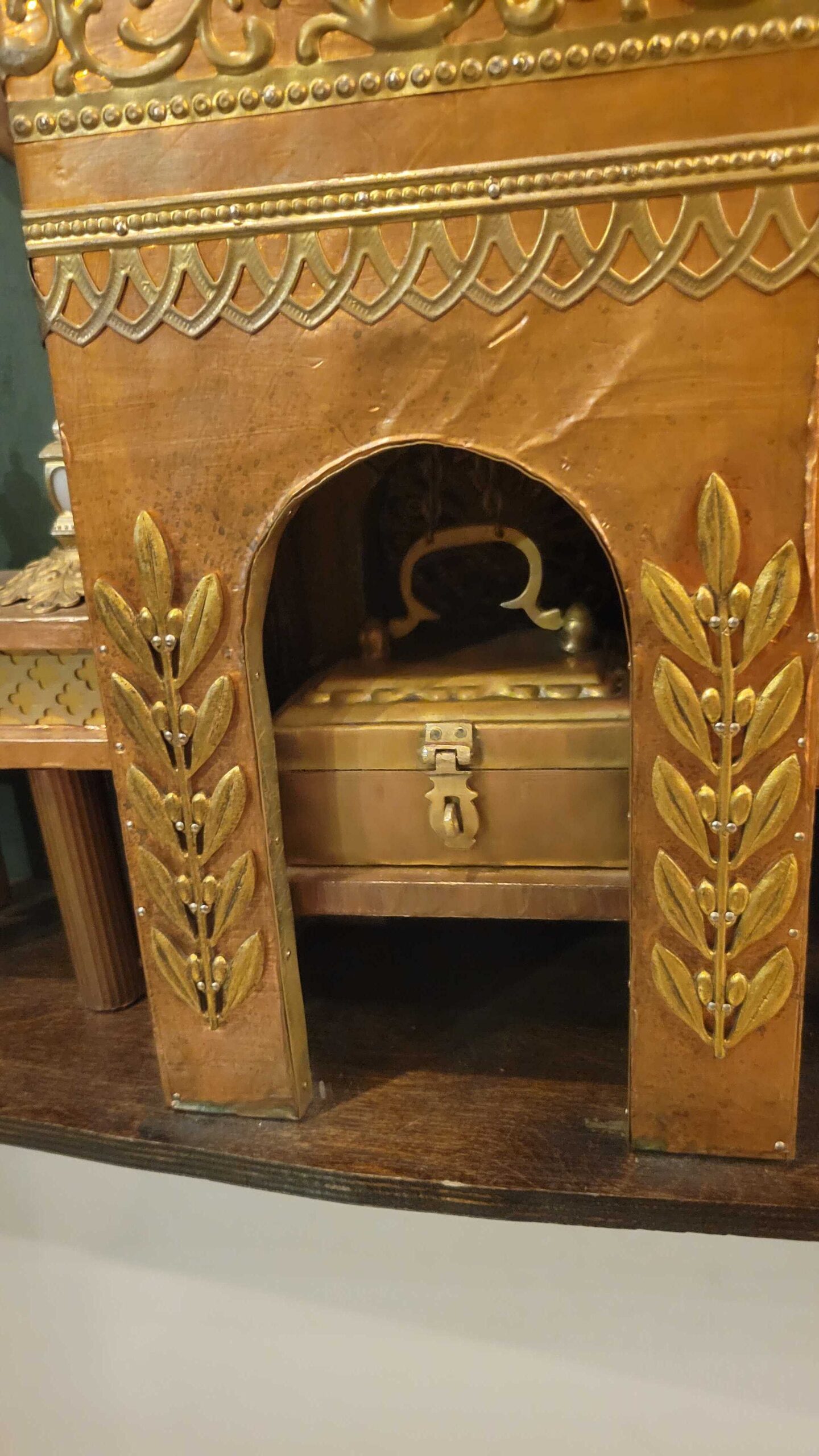
When all six segments are lit, a small elevator hidden within an ornate arched niche at the base of the Scintillator tower descends on chains, delivering a brass-clasped box containing a key.

All six segments lit and the key delivered signals this puzzle is solved. With a series of final puzzles completed, the third and final wall (this one moving vertically!) rises to reveal the Yay Space beyond.

Original concept sketch of the Scintillator

// Original Scintillator concept sketch. The central tower, radiating light panels, and flanking lanterns all made it into the final build.

The Scintillator fully activated — all six segments lit

// The Scintillator at full activation with all six segments lit, relayed through the Photon Plasma Repeater tubes. This is the puzzle solved state.

The key elevator in its lowered position, box delivered

// Elevator fully descended. The brass-clasped box containing the key sits in the niche, delivered on chains from within the Scintillator tower.

The key elevator mid-descent

// Elevator mid-descent. The mechanism is hidden within the ornate tower above; players see only the box appearing from the darkness of the arch.

Build Highlight 06

The Yay Space: The Vertical Door and the Finale

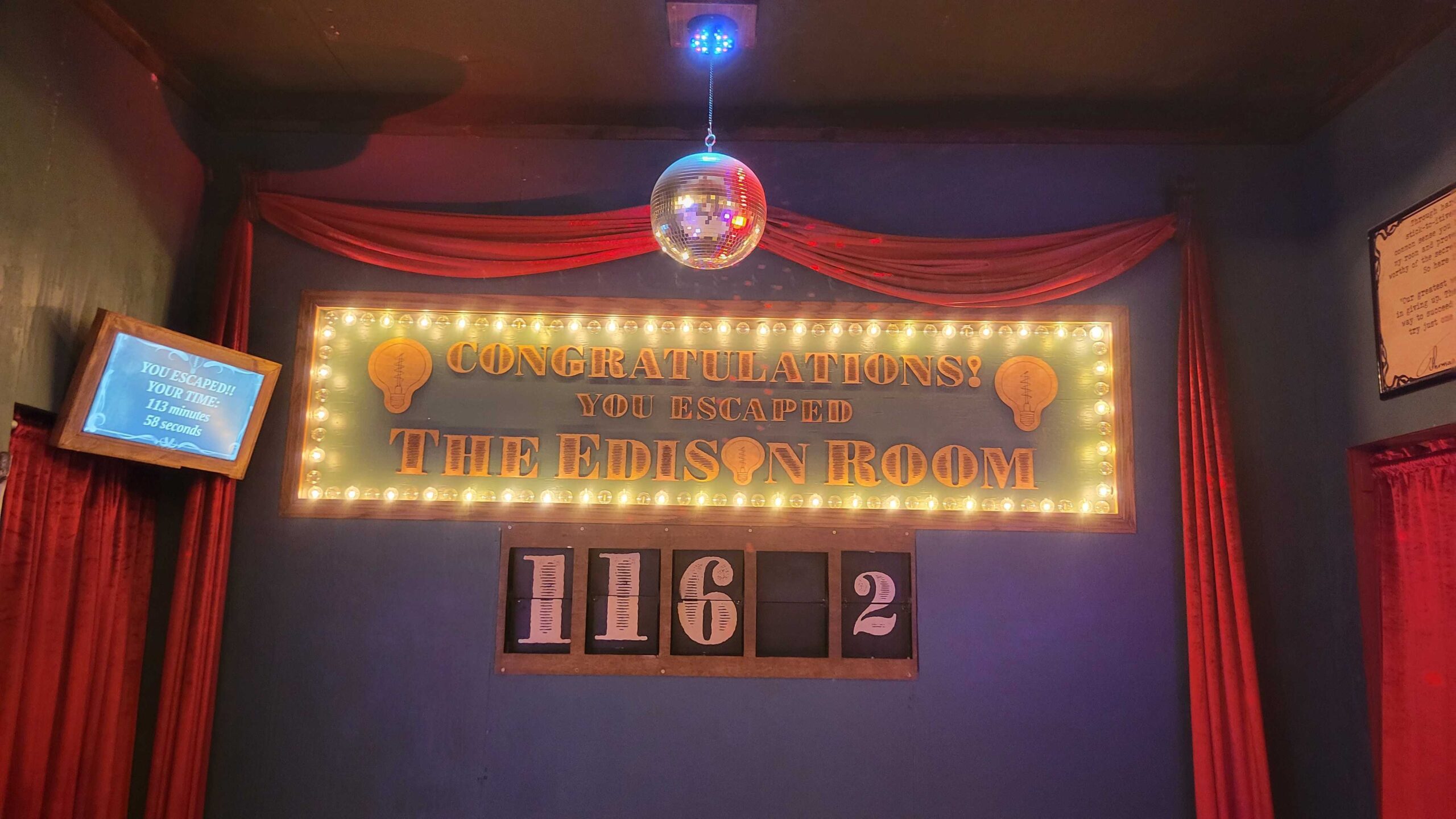
The final reveal is a third fly-away wall, this one moving vertically. It houses five large LED-embedded “meters” that fill as players perform a final kinetic floor game of considerable silliness. When all five are full, the vertical door rises to reveal the Yay Space: the victory room, complete with a congratulatory marquee sign, a mirror ball, red velvet curtains, and a clock displaying the team’s escape time.

The Yay Space — the victory room

// The Yay Space. A marquee sign, mirror ball, red curtains, and an escape clock greet players who make it through. The score shown here: 1 hour, 16 minutes, 2 seconds.

Awards & Rankings

The Edison Room earned Room Escape Artist’s highest honour — the Golden Lock-In Award — in its opening year, and has been cited as a benchmark of technology-driven escape room design and a direct predecessor to The Attraction.

2018Golden Lock-In Award — Room Escape Artist
2018“Worth traveling a distance to visit” — Room Escape Artist
OngoingCited by Room Escape Artist as a direct predecessor and major step toward The Attraction

Critical Reception

Room Escape Artist
2018 Golden Lock-In Award Winner
“The Edison Escape Room was a brilliant display of technology in escape room design. As impressive as it was fun.”

“Palace Games succeeded in blurring the lines between real life and video game.”

“The gamespace responded to our actions. Furthermore, it adapted to the team’s ability. It was impressive.”

Read the full review →

The Experience, Live

The Edison Room has been running live at Palace Games since opening, hosting thousands of players across multiple daily sessions.

34,000 LEDs

Every light in the room — floor tiles, jar jewels, devices, repeater tubes, and the Scintillator — is individually addressed and driven by the game state machine.

A Room That Triples in Size

Three wall reveals (two swinging, one vertical) expand the gamespace progressively over the experience, each timed to a puzzle solution.

Critically Acclaimed

Room Escape Artist’s 2018 Golden Lock-In Award winner. Named a room “worth traveling any distance to visit” and a direct precursor to The Attraction.